

How Can Buyers Specify an Oval Dining Table with Two Surface Options? A Maxine Procurement Guide
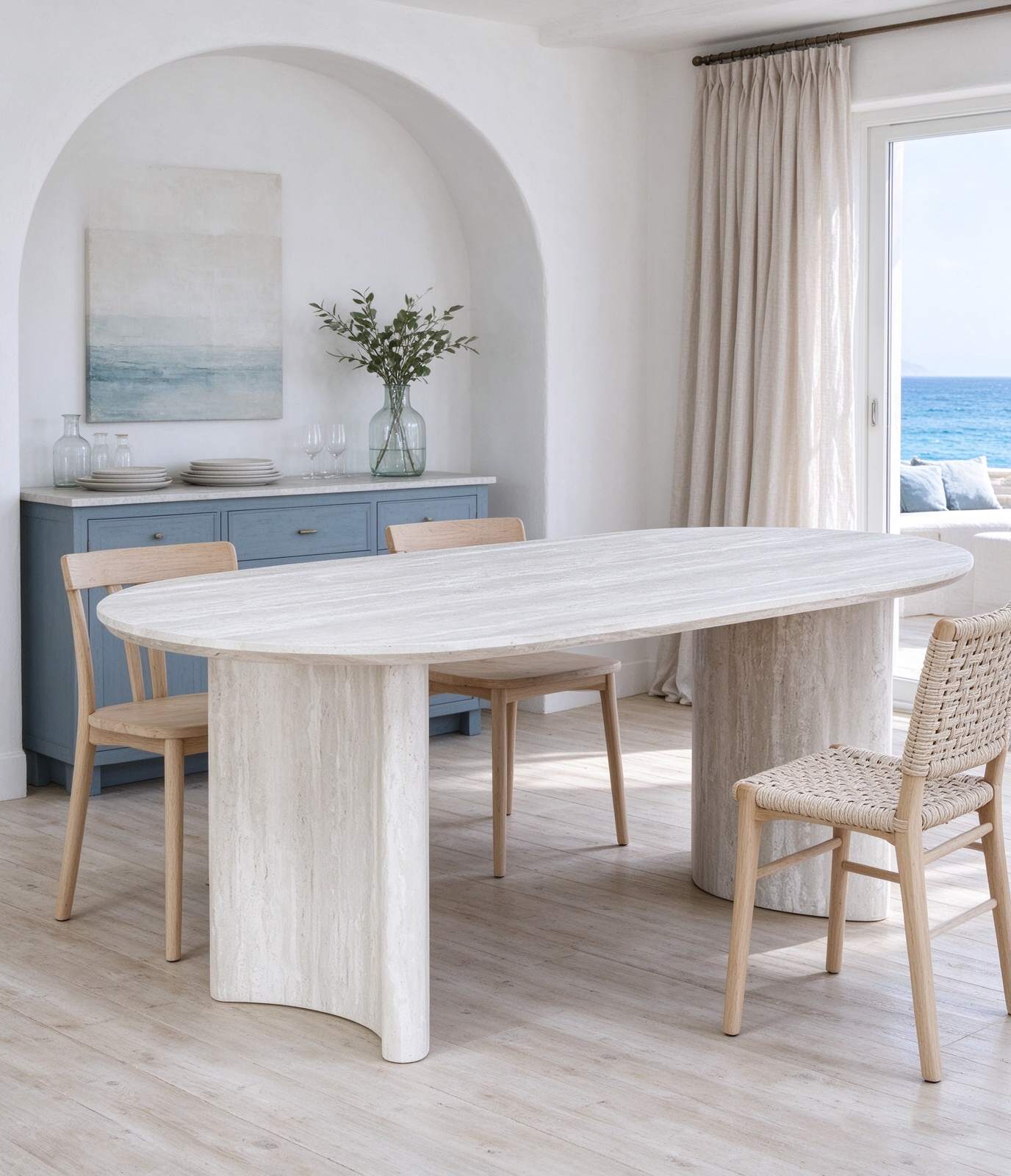
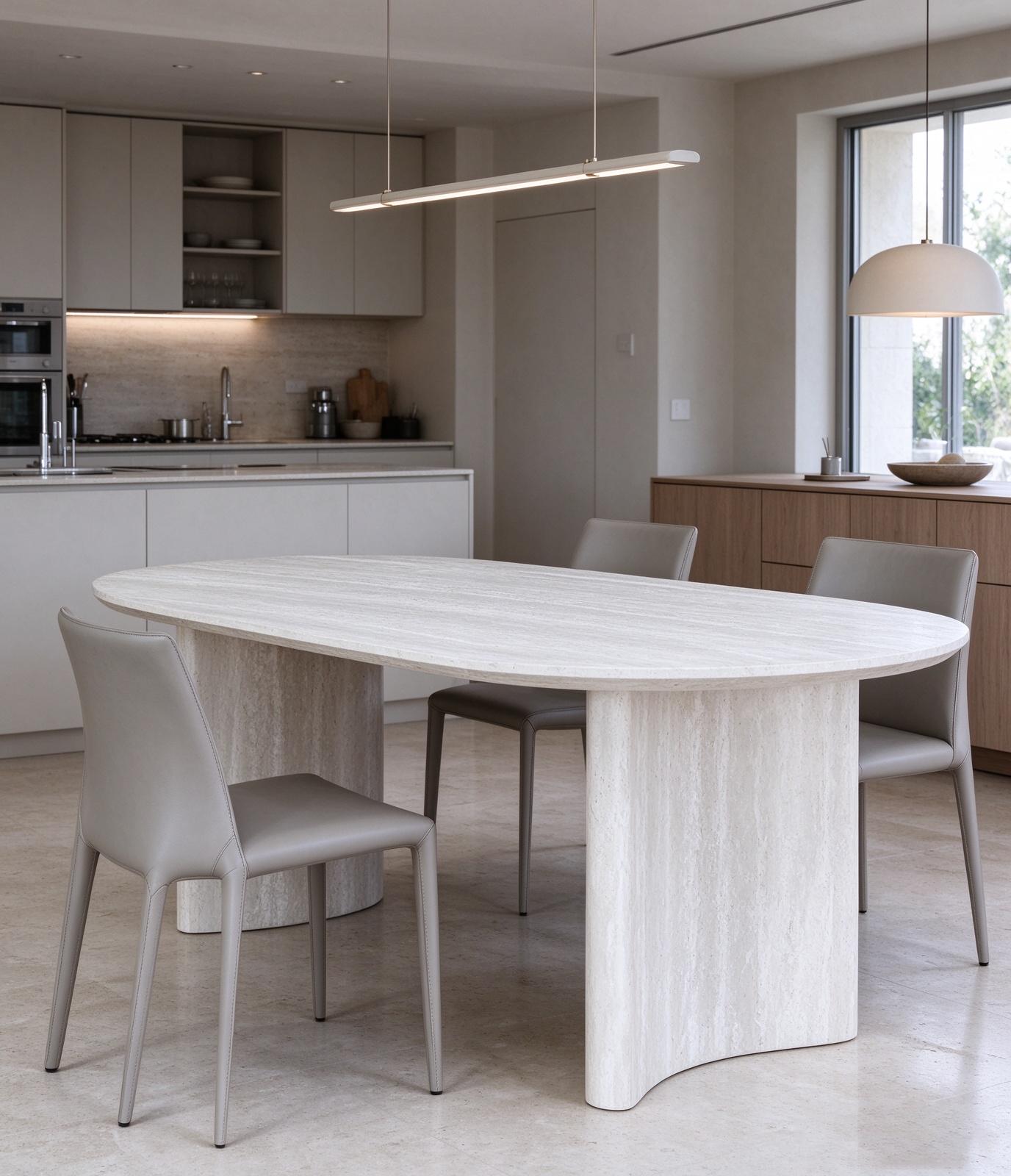
Here’s the awkward bit about buying a table from a photograph: you can be certain about the silhouette and still be unsure what you’ve priced. With Maxine Oval Dining Table, that distinction deserves a closer look. The published description offers grey travertine veneer over an MDF core, or a matte MDF surface with travertine effect laminate. I’d begin an oval dining table wholesale inquiry by naming both versions in full. “Maxine, grey” leaves too much room for interpretation, especially once the email moves from merchandising to purchasing.
Why Give the Two Options Separate Order Lines?
Picture a possible mix-up. Let’s say the original email contains only a catalog link. By the time it reaches the spreadsheet, the link has become a model name with a price beside it. Where did the surface option go? But unless the construction appears beside that price, the team still doesn’t know which table the quote covers. Separating the options at the start is a fairly painless way of closing that gap.
Spell Out What Is Under the Surface
For the travertine veneer dining table, my inquiry would read, “Please identify the core and the visible stone layer in the quotation.” The matte MDF dining table gets its own line for the laminate. That’s enough to start a useful conversation without pretending to know details the catalog hasn’t supplied. It also prevents an MDF core with stone veneer from turning into “solid travertine” when somebody writes the retail copy later.
Number the Samples
Two references, two approval dates. Simple, but I’d put them on the order rather than leave them in a chat thread. The sample ought to show the surface you’re discussing; a tiny chip helps with color, while a larger view reveals the pattern. When an order includes both options, approval of one doesn’t carry over to the other.
How Would You Compare the Quotes?
I’d put the two prices side by side only after the assumptions matched. Same requested quantity, same destination, same packing requirement. Without that, the spreadsheet looks more precise than it is. This is also useful when comparing Maxine with other طاولات الطعام: a different order quantity can change the conversation before the material even enters it.
The cheaper option may suit your range. Or the other surface may be the one your merchandiser actually wants. Either decision needs a reason tied to the product and the selling brief. “Looks closer to the rest of the collection” is a reason. Claiming that one finish handles all hot dishes, with no supporting test, isn’t a sound purchasing shortcut.
For a project, I’d include the cleaning question in the first email. What cleaner will staff use? How often? The supplier can respond to those details. A vague “easy care” statement doesn’t help the person writing the care sheet, particularly where the two surface constructions differ.
What Does the Shared Shape Tell You?
Less than you might think about the parts underneath. Maxine’s description includes an oval top, curved base, and beveled edge. That describes the appearance; a drawing for each quoted construction would explain the assembly. I’d want to know whether the same mounting points and base components serve both options.
Ask for the View Nobody Puts on the Cover
An underside photograph is useful here. So is a drawing through the edge, if one is available. You want to see where the decorative layer ends and how the curved perimeter is finished. Another attractive room photograph won’t answer that. A sample taken from a straight section may also leave the oval ends out of the discussion.
Talk About the Whole Batch
Imagine buying several tables for one dining area. You might like differences between pieces; you might want them to look closely matched. The supplier needs to hear which. I’d ask to see the expected appearance range for the veneer and the repeat pattern for the laminate before choosing a reference. That keeps the approval from becoming “make every table exactly like this photograph,” when the supplier has never agreed it could.
How Do the Cartons Fit into the Specification?
Maxine’s published packing description says one piece in two cartons. Two boxes are manageable, of course. My concern would be whether their labels tell the warehouse which ones belong together. A buyer carrying both surfaces needs a way to tell them apart before opening the boxes.
Separate stock codes would be my starting point. Each carton should make the intended pairing clear, with the agreed surface name included where it matters. Think of the person dispatching a single table: can they choose both boxes confidently from the labels? That question is worth settling with the supplier while labels can still be changed.
إن packing requirements in your inquiry should include final carton dimensions and gross weights for each option. Freight should be calculated from the packed version being ordered. Catalog figures can start the estimate, but a customized packing arrangement needs fresh confirmation. Any difference in hardware needs to appear on the instructions. Otherwise the customer is left trying to reconcile a bag of parts with a drawing for the other version.
Img.How Can Buyers Specify an Oval Dining Table with Two Surface Options.webp
What Would You Send to Forest Furniture?
Maxine isn’t the only MDF table in the أثاث الغابات range; panel furniture sits alongside its solid wood and upholstered products. The company manufactures and exports, working with retailers, wholesalers, and online sellers. For this particular brief, the useful detail is Maxine’s listed customization scope: material, color, and packaging. You can take those subjects into the discussion with the supplier.
A quotation inquiry could begin, ‘We’re considering both Maxine surface options for our range. Please quote them separately for the quantity and destination below.’ Follow that with your questions about construction, samples, and packing. The reply gives purchasing something to price and merchandising something to describe. Neither department should have to fill in the missing material details.
استنتاج
I’d be happy to keep both options under the Maxine name, but I’d never leave the surface choice buried in an email. It belongs beside the price and sample number. Add the carton references there too, and the buying file starts to look like the table that will actually be supplied.
الأسئلة الشائعة
Is the veneer option solid travertine?
It’s described as stone veneer over an MDF core. Calling it solid stone would lose that distinction. The supplier’s confirmed construction should be the basis of the listing.
Can one sample approve both finishes?
Only if you’re approving the shared shape. For appearance and care, a sample of one surface can’t answer the questions about the other.
When should packing details be confirmed?
I’d settle them while the quote is being finalized. A two-carton description tells you the number of boxes; it doesn’t tell your freight team their final weights or your warehouse how to pair them.
