


FF&E vs OS&E A Practical Hotel Procurement Primer and Budget Logic That Holds Up Under Real-World Pressure
FF&E vs OS&E is one of the most searched pairings in hotel procurement because the distinction affects almost every decision that follows: how budgets are built, how purchase orders are routed, how deliveries are sequenced, and how opening readiness is protected. The challenge is that many projects understand the definitions in theory yet still lose time and money in practice. Costs drift when items are misclassified, the pre-opening timeline compresses, and late-stage “must-have” operational purchases show up after construction has already consumed contingency.
A useful primer should do more than define terms. It should connect procurement categories to budget mechanics, scheduling, and accountability. This article does that with an implementation-oriented structure: category logic, common failure points, a budget framework that can be applied to new-build and renovation projects, a procurement timeline tied to opening day, and a field-tested way to translate “FF&E budget breakdown” and “OS&E checklist” into a plan that teams can actually execute.
FF&E and OS&E, Clearly Defined Without the Usual Confusion
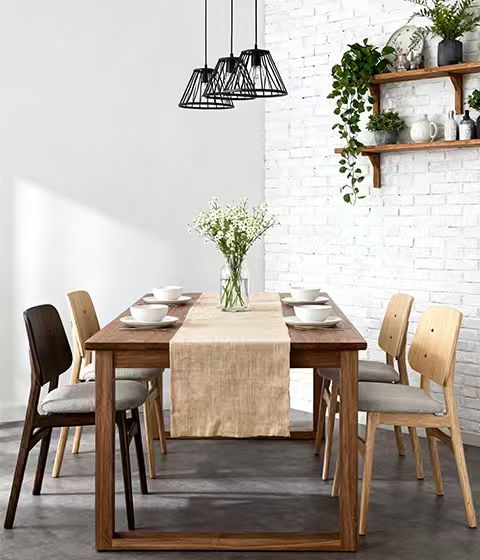
FF&E refers to أثاث, fixtures, and equipment that shape the built environment and typically remain in service for multiple years. In hotel terms, this includes guestroom casegoods, seating in public areas, headboards, tables, upholstered beds, and other durable items that define the room experience and are not consumed through everyday use. A dining chair that must withstand thousands of seating cycles, a coffee table designed to handle luggage impacts, and a sofa bed engineered for repeated conversion are all classic FF&E examples because they function as long-lived assets.
OS&E refers to operating supplies and equipment required to run day-to-day hotel operations and sustain service standards. OS&E includes items that are replenished, laundered, replaced more frequently, or cycled through operational workflows. Bed linens, towels, housekeeping tools, guest amenities, many small appliances, certain kitchen and banquet items, and back-of-house supplies generally land in OS&E because they support operations rather than becoming part of the physical “fit-out.”
The cleanest way to separate the two is not a debate over labels, but a decision rule tied to behavior over time. If an item is specified as part of the interior build-out, requires coordination with installation, and is expected to remain in place across multiple operating cycles, it is usually FF&E. If an item is consumed, replenished, rotated, or replaced as part of normal operations and service delivery, it is usually OS&E. That simple rule reduces rework later when accounting, procurement, and operations begin reconciling CapEx and OpEx assumptions.
Why Projects Still Overspend After “Getting the Definitions Right”
Budget volatility often starts early, during scope development, then compounds through procurement and logistics. The most common issue is category drift: items move between FF&E and OS&E depending on who is looking at the list. A hair dryer can be treated as an OS&E operational necessity by operations, while design may include it as a guestroom standard that “belongs” with room setup. The classification itself matters less than consistency, because inconsistency creates double counting, missed approvals, and schedule misalignment.
The second driver is incomplete total delivered cost. Many budgets treat unit price as the whole story, then discover the real spend includes freight, destination handling, warehousing, consolidation, last-mile delivery constraints, floor protection, and installation labor. On a tight opening schedule, a single missing piece of hardware can create a cascade: a room cannot be released for final cleaning, punch list items stack up, and the opening date suddenly becomes a risk conversation rather than a plan.
The third driver is late operational input. OS&E decisions often arrive after the design-heavy work is already underway. When housekeeping and food-and-beverage teams finally get the opportunity to review lists, they add items that are non-negotiable for operating standards. Those additions are valid, but when they arrive late, they land in the most expensive place: expedited orders, premium freight, and rushed receiving.
A fourth driver shows up in renovation projects: the assumption that reuse is “free.” Reusing casegoods or seating can be cost-effective, but only if refurbishment scope is defined, replacement parts are available, and finish matching is achievable. Otherwise, the project buys time with reuse decisions and later pays it back with change orders and rework.
Budget Logic That Works: A Two-Dimension Framework for Hotel Purchasing
A reliable hotel FF&E budget template separates questions that often get mixed together: what is being purchased, where it is used, and what it costs to deliver and install. The strongest structure is built on two dimensions that intersect.
The first dimension is the space module. Guestrooms, corridors, lobby and lounge, meeting areas, restaurant and bar, fitness, and back-of-house all behave differently in wear-and-tear patterns and in delivery complexity. Guestrooms tend to be repetitive and benefit from standardization. Public areas are design-forward and may require more custom finishes and lead time. Back-of-house is functional and can be cost-effective, but must still be durable and safe.
The second dimension is the cost stack. Product cost is only the beginning. Delivered cost includes packaging requirements, inland transport, international freight when applicable, customs and duties where relevant, destination handling, temporary storage, damage allowance, consolidation, floor-by-floor distribution, and installation coordination. That stack is where budgets most often fail, because it is distributed across vendors and workstreams, and the total is not visible until late.
When these two dimensions are combined, the “FF&E budget breakdown” becomes less abstract. For example, guestroom seating might appear inexpensive per room, but if there are multiple chair styles, multiple fabrics, and staggered approvals, lead time and change management can raise the delivered cost beyond expectations. Similarly, OS&E can look small as a category until departmental detail is applied. Housekeeping OS&E behaves differently from food-and-beverage OS&E, and both behave differently from engineering and front-of-house OS&E. A serious OS&E checklist reflects that operational reality rather than treating OS&E as a single bucket.
A Realistic Scenario: Where Hidden Costs Usually Appear
Consider a midscale hotel preparing for opening with a mix of standard guestrooms and a smaller set of upgraded rooms. The team approves guestroom casegoods early, but lounge seating and restaurant furniture remain in design review. Meanwhile, operations delays final decisions on linen par levels and amenity standards until staffing plans are firm.
In this scenario, FF&E risk concentrates in the spaces with the most design variation. A lobby lounge with multiple fabric selections and mixed materials tends to require more sample approvals and can generate late changes. A restaurant dining chair spec that looks perfect on paper can fail in use if it is not appropriate for high-turn service, leading to last-minute substitutions. OS&E risk concentrates in service readiness. If the OS&E list is approved late, freight costs rise because purchase orders cluster in the final weeks before opening. Warehousing becomes a problem because deliveries arrive before rooms are ready to receive them, forcing offsite storage and added handling. Once handling increases, damage rates typically rise, triggering replacement orders that were never in the original plan.
This is why the budget conversation must be paired with a sequence conversation. A procurement plan that protects the opening date is not the same as a plan that simply buys everything.
Procurement Timeline: Linking FF&E and OS&E to the Opening Date
A practical pre-opening timeline begins with decision milestones rather than purchase orders. For FF&E, the earliest milestone is design freeze for repetitive guestroom packages. That milestone enables pricing confidence, production scheduling, and coordinated shipping windows. After design freeze, the next milestone is mock-up validation, where key items are tested in a real room setting. This step catches ergonomics issues, finish mismatch, clearance problems, and installation constraints before replication across hundreds of rooms.
OS&E runs on a different rhythm. Operations needs must be defined early enough to avoid the end-of-project procurement crush. OS&E should move through departmental sign-off in parallel with staffing and training planning, because the OS&E list is fundamentally an operating model translated into purchases. When OS&E sign-off happens late, the project pays for time through expedited shipping and operational disruption.
The receiving and installation window is where both categories collide. FF&E deliveries that arrive too early create storage and handling risk. Deliveries that arrive too late create incomplete rooms. OS&E deliveries that arrive without a distribution plan create chaos: cartons pile up, inventory goes missing, and teams waste labor hunting for supplies. A controlled timeline anticipates these collisions and builds in staging logic.
Decision Rules That Prevent Category Drift and Late Rework
Category drift is rarely malicious; it is usually a symptom of unclear ownership. The simplest prevention is to define how items are classified for the purpose of procurement, budget reporting, and opening readiness, then keep that rule consistent even if accounting treatment differs later.
A second prevention rule is to tie every line item to a destination and a responsibility. If an item does not have a room type, department, or space assignment, it should be treated as suspect because it cannot be received and distributed efficiently. Similarly, if a line item does not have a responsible owner for specification and approval, it will likely appear late as a change request.
A third prevention rule is to track “submittal readiness” early. For furniture and casegoods, readiness means finishes are selected, dimensions are confirmed, and installation needs are understood. For OS&E, readiness means par levels are set, storage constraints are known, and replenishment assumptions are aligned with service standards. Projects that treat procurement as paperwork, rather than readiness, often see the highest level of last-minute purchases.
How to Translate Budget Logic Into Action Without Fragmenting the Plan
A common failure is to produce a beautiful spreadsheet that cannot be executed. Execution requires a narrative that connects budget assumptions to operations and logistics. The narrative should address four questions in sequence.
First, what must be standardized to protect cost and schedule? Repetitive guestroom packages are ideal candidates for standardization. Second, where is customization justified, and what does customization cost in lead time and approvals? Public area feature pieces may warrant customization, but the project should pay for it knowingly. Third, how will freight and warehousing be managed? Without consolidation logic, delivery costs and damage risk rise fast. Fourth, how will opening readiness be verified? A room that is “mostly done” is not open-ready; it is still a liability because it consumes labor at the worst possible time.
When these questions are answered, the procurement plan becomes defensible. Teams can explain why certain items were procured earlier, why some were staged, and how OS&E readiness was protected without unnecessary spend.
Forest Furniture in Hotel and Contract Projects

أثاث الغابات is a furniture manufacturing and export company with headquarters in Tianjin and a production footprint across northern China, positioned to support efficient manufacturing and consistent product quality. The product range spans solid wood furniture, upholstered furniture, and panel furniture, aligning well with the core FF&E categories used in hotels and other contract environments.
For project teams building guestroom packages and public-area furniture scopes, the catalog structure supports common hotel needs across tables and desks, chairs and benches, sofas and ottomans, panel furniture such as shelves, cabinets, nightstands, headboards and TV units, and beds including solid wood and upholstered designs. The company’s stated mission emphasizes providing high-quality furniture solutions that serve both residential and commercial spaces, which maps to the realities of hospitality projects where durability, finish consistency, and repeatable production are operational requirements rather than marketing statements.
استنتاج
FF&E vs OS&E is not merely a vocabulary exercise. The split determines how hotel procurement is planned, how budgets are defended, and whether the project reaches opening day with rooms that are truly ready. A workable approach ties category definitions to consistent decision rules, then builds a two-dimension budget structure that respects both space modules and the full delivered-cost stack. When procurement milestones are linked to real readiness, not just purchase orders, late-stage surprises become exceptions instead of the norm. The outcome is a budget that can be explained, a timeline that can be executed, and a procurement process that protects guest experience while keeping cost and risk within control.
الأسئلة الشائعة
Why is FF&E vs OS&E so confusing in hotel procurement?
FF&E vs OS&E becomes confusing when items are classified differently by design, operations, and finance. The most practical fix is to use a consistent rule tied to how the item behaves over time: durable, installed, and long-lived items are typically FF&E, while replenished, rotated, or frequently replaced items are typically OS&E. Consistency matters more than the label, because inconsistency drives double counting, missed approvals, and late purchasing.
How can a hotel FF&E budget breakdown avoid missing freight and warehousing costs?
A hotel FF&E budget breakdown should separate product cost from delivered cost. Delivered cost typically includes packaging requirements, transport, customs and duties where applicable, destination handling, offsite storage, consolidation, last-mile delivery constraints, and installation coordination. When these costs are tracked as explicit budget lines rather than buried in assumptions, variance becomes visible early and corrective action becomes possible.
What should be included in an OS&E checklist for a hotel pre-opening timeline?
An OS&E checklist should mirror how the hotel will operate on day one. That means OS&E should be organized by department and workflow, including guestrooms and housekeeping, food and beverage service, front desk and guest services, engineering, and back-of-house support. Par levels, storage constraints, and replenishment assumptions should be set early enough to prevent a final-month purchasing rush that drives expedited shipping and operational disruption.
When should mock-up and prototyping happen in the FF&E procurement timeline?
Mock-up and prototyping should occur after the repetitive guestroom package reaches design freeze but before orders scale across the full room count. This timing allows materials, finishes, ergonomics, and installation conditions to be validated in a real environment, which reduces change orders and prevents the costliest form of rework: replacing items after delivery.
How can the hotel procurement process prevent late-stage OS&E and FF&E surprises?
The hotel procurement process can reduce surprises by defining ownership for every line item, tying each item to a destination space or department, and treating “readiness” as a milestone. Readiness means the specification is approved, lead time is understood, delivery staging is planned, and receiving and distribution are mapped to the opening date. When those elements are managed early, late-stage purchases become targeted exceptions rather than a systemic problem.
