

Modular Furniture vs Traditional Furniture: Which Is More Cost-Effective Long-Term? (2026 Updated Comparison)
Supply chain discussions on modular systems against traditional fixed builds inevitably land on the same hard metric: total ownership cost mapped over a full decade or more. Modular furniture revolves around separate, interlocking parts engineered for reconfiguration, expansion, or breakdown. Traditional furniture commits to fixed, unified construction—typically solid wood with permanent joinery that locks everything in place for structural longevity rather than frequent change. Wholesalers, contract specifiers, hotel procurement managers, and residential buyers who keep pieces in service long-term all wrestle with the same calculation: which direction yields the lowest actual spend once purchase price, real-world durability, repair intervals, adaptation costs, and resale or residual recovery are fully accounted for.
Years tracking material performance and replacement patterns across channels make one point clear—catalog prices only hint at the outcome. Selections that seem budget-friendly early on often flip when cumulative wear, service records, and secondary market returns come into view. The analysis below draws directly from observed behaviors in hardwood species, engineered substrates, connection hardware, and documented cycles in both hospitality and residential supply lines.
Defining Modular and Traditional Furniture
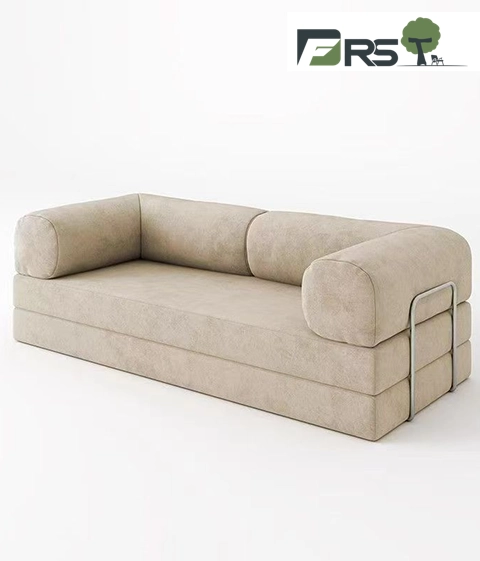
Modular furniture breaks down into independent, joinable segments. Sectional seating with removable ottomans and arms, expandable storage towers, and clip-together workstation panels define the category. The design priority is reconfiguration: parts detach, shift, or supplement using standardized fasteners and interfaces.
Traditional furniture arrives as a finished, permanent assembly. Solid wood dining tables built with deep mortise-and-tenon rails, dowel-joined chairs, and fixed-frame upholstered pieces represent the standard. Mechanical movement is minimized; strength comes from irreversible joinery and material density.
| Aspekt | Modular Furniture | Traditional Furniture (Especially Solid Wood) |
|---|---|---|
| Initial Purchase Cost | Medium to high, commonly phased | Medium to high, typically purchased complete |
| Adaptability to Changes | High—standard connectors enable quick shifts | Low—full piece must move or stay |
| Primary Target Users | Rental turnover, office churn, evolving layouts | Long-hold residences, hotels, fixed restaurant seating |
These structural choices create sharply different cost trajectories over time.
Initial Purchase Price Versus Long-Term Amortization
Supplier quotes for mid-level modular sectionals and matching traditional dining or lounge suites frequently overlap in broad price bands. The split emerges in deployment patterns.
Modular orders often roll out in stages—core units first, then additions as occupancy or budget grows. That spreads capital, but completed layouts regularly run 20–40% over early estimates once matching hardware, extra modules, or refresh components enter the ledger.
Traditional purchases demand full outlay at order placement, yet the cost thins dramatically across extended service windows. A solid wood extension table or matched dining set under daily commercial or residential load routinely amortizes to $50–$100 per year across 15–20 documented years. Integrated extension hardware supplies controlled variability while sidestepping the layered failure points common in fully modular constructions.
Typical contract case: mid-scale restaurant planning phased seating growth. Modular path means multiple POs for incremental sections, carrying risks of finish drift and connector mismatch. Traditional solid wood suite with built-in extension meets the same headcount increase in one delivery, locking material consistency and finish match for the full cycle.
Durability and Physical Lifespan
Physical lifespan drives the largest share of cost variance in furniture specification. Modular performance rests on connector durability. Routine breakdown and reassembly—standard in rental refreshes, office re-plans, or seasonal layout tweaks—stresses clips, cams, and alignment features. Mid-to-upper modular seating lines generally deliver 7–15 years before measurable joint play, upholstery fatigue, or frame deflection appears. Budget-grade constructions often hit replacement thresholds at 5–10 years.
Solid wood traditional furniture operates on a longer timeline. Selected dense hardwoods and stable grain orientations outperform lighter engineered cores or particle substrates under sustained compression, impact, and abrasion. Supply records and maintenance histories place well-kept solid wood tables and chairs solidly in the 15–30 year window before structural work is needed, with many units continuing service after targeted refinishing.
Hospitality benchmark: modular banquet groupings reconfigured quarterly show connector slack within 5–8 years, triggering spare-part orders. Traditional solid wood chairs stacked nightly and occupied at full capacity maintain rail and joint integrity far longer, typically requiring only upholstery renewal or surface restoration after 10–12 years of continuous operation.
Maintenance and Repair Expenses
Service and repair loads follow distinct rhythms. Modular architecture supports granular replacement—one degraded cushion, arm, or base swaps without scrapping the suite. Material waste stays low in principle, but intervention volume climbs because every mechanical interface carries wear risk.
Traditional furniture generates repair tickets far less frequently, though each event may call for higher craft skill. A split solid wood stretcher or checked joint demands woodworking repair rather than catalog replacement. Spacing between events stretches significantly; commercial service logs commonly record major touch-ups only every 8–12 years, often limited to finish renewal or minor glue-block reinforcement.
Practical forecasting inputs:
-
Projected relocations or full reconfigurations per decade
-
Daily occupancy intensity (public high-traffic versus controlled private use)
-
Access to qualified trade resources—traditional solid wood draws stronger support from established local woodworking shops
Short-term rental and hotel operators prize modular for rapid part swaps that limit room downtime. Long-cycle owners with stable floor plans see traditional pieces deliver markedly lower cumulative service spend.
Adaptability Costs in Changing Spaces
Adaptation costs spike around moves or floor-plan revisions. Modular furniture handles these events efficiently: sections separate for lighter transport loads, reconfigure to new dimensions, and scale without wholesale repurchase.
Traditional furniture carries heavier freight penalties from indivisible mass. Occupancy surveys across residential and commercial segments show most placements stabilize for 10+ years after initial fit-out. When moves stay at one or two per decade, the modular handling advantage shrinks substantially.
Extension dining tables carve out a workable compromise zone. They supply variable length through leaf storage or draw-leaf mechanics, maintaining the joinery strength of traditional builds while covering moderate occupancy swings.
Resale Value and Residual Worth
Disposition markets expose one of the widest gaps. Modular furniture loses value quickly. Partial configurations or standalone sections draw thin bids; secondary buyers strongly prefer complete, coordinated suites from active lines.
Solid wood traditional furniture retains capital far more effectively. Maintained dining sets, side chairs, and occasional tables regularly return 50–80% of original cost through resale channels, with select items gaining premium from developed patina. Contract buyers routinely build this residual recovery into cycle planning, using liquidation proceeds to offset next-generation capital.
Real-World Scenarios and Cost Calculation Framework
Scenario 1: High-turnover rental portfolio or agile office space with shifts every 2–4 years → modular curbs repeated full-suite discard and repurchase.
Scenario 2: Owner-occupied home or generational restaurant property retained 15+ years → solid wood traditional furniture posts the lowest amortized figure through prolonged physical life and robust resale recapture.
Scenario 3: Hotel or branded residence chain running 10-year refresh programs → traditional solid wood supplies predictable performance, consolidated service scheduling, and stronger offset value at disposition.
Trade-standard ownership equation: Total Ownership Cost = Initial Price + (Relocation / Adaptation Expenses × Frequency) + Cumulative Repair Spend − Resale / Residual Recovery
Representative 10-year mid-tier projection:
-
Modular sectional assembly: $3,500 initial + $800 repairs/adaptations − $500 resale ≈ $3,800 net
-
Traditional solid wood dining collection: $4,000 initial + $300 repairs − $2,000 resale ≈ $2,300 net
Inputs require calibration to actual traffic levels and regional service pricing.
About Forest Furniture
Waldmöbel operates as a China-based manufacturer and exporter specialized in wholesale furniture delivery to global trade partners. Tianjin headquarters coordinates operations, with production clustered across northern China sites to optimize material sourcing, labor access, and quality oversight. Core output focuses on solid wood tables and chairs, upholstered seating lines covering sofas, lounge chairs, and complementary pieces, alongside panel furniture using MDF tops with metal bases, tempered glass, or sintered stone surfaces. Extension dining tables stand out as a signature segment, merging practical length variation with the structural advantages of traditional woodworking methods. Distribution reaches retailers, wholesalers, e-commerce operators, hotels, and short-term accommodation providers throughout Europe, Southeast Asia, the Middle East, Australia, the United Kingdom, South Korea, Japan, Russia, and broader markets. Consistent investment in high-grade raw stock and product evolution sustains reliable, long-duration partnerships across international supply networks.
Schlussfolgerung
Neither modular nor traditional furniture dominates every specification. Cost-effectiveness pivots on anticipated service window, change frequency, wear exposure, and weight placed on capital recovery. Modular builds serve environments that demand repeated reconfiguration. Traditional executions—especially in solid wood—repeatedly prove more economical across longer horizons through superior physical resilience, lighter service burden, and dependable residual return. Specifications oriented toward decade-plus cycles generally find that early structural commitment translates into tangible downstream savings.
Häufig gestellte Fragen
Is modular furniture more cost-effective long-term than traditional furniture?
Modular can hold advantage in high-change, short-cycle settings, but over 10+ years traditional furniture—particularly solid wood—typically records lower total ownership cost via extended lifespan, reduced repair events, and far stronger resale recovery.
How long does solid wood traditional furniture typically last compared to modular?
Solid wood traditional furniture consistently achieves 15–30 years or beyond with routine care, benefiting from dense stock and irreversible joinery. Modular furniture averages 7–15 years before connection fatigue or frame wear surfaces noticeably.
What affects the long-term cost comparison between modular and traditional furniture?
Dominant variables include initial price amortization, repair and adaptation cadence, relocation outlay, maintenance load, and resale/residual performance. Long-tenure residential or fixed commercial installations heavily favor traditional furniture.
Does traditional furniture have better resale value than modular?
Solid wood traditional furniture reliably returns 50–80% of original cost in active secondary channels. Modular sections depreciate sharply, as market demand centers on full, matched configurations rather than piecemeal components.
When should buyers choose traditional furniture for long-term savings?
Traditional furniture pulls ahead clearly on projects exceeding 10 years, minimal moves, or hospitality layouts that remain constant. Extension tables supply needed occupancy flexibility while retaining the full durability and economic profile of solid wood construction.
