

Dining Chairs Scratching Hardwood Floors? Felt Pads vs Plastic Glides for Wooden Legs
A dining chair that appears smooth to the eye could begin making marks on your hardwood floor. This kind of damage is likely to occur after eating many meals where the same chairs move in and out of place on the same area of flooring. Damaged feet or protective coverings as well as grit being caught underneath could be the cause of such marks even if the chairs themselves are of good quality. There are two main types of coverings used – felt pads and plastic glides.
Why Do Dining Chairs Leave Scratches on Hardwood Floors?
Scratches do not necessarily occur when there is direct contact between the naked wood and the floor. Even the slightest change in this area can result in abrasion.
Grit and Worn Chair Feet
The sand and bits of dirt caught between the bottom of the chair’s legs will become abrasive in nature as the chair is moved around. The smooth surface of the pad will get worn out, become loose or expose its hard surface due to the collection of dust and other elements. First, you should clean the floor and check all the four feet of the chair.
Pressure, Dragging, and Uneven Contact
The chair focuses its weight on a small number of contact surfaces. Legs that are not even and/or protectors that are not level will cause higher pressure on one side, and dragging the chair will lead to continued motion over the flooring surface. Flooring companies also vary in their specifications regarding floor protectors. Before installing any glides, verify the flooring material and its requirements.
Are Felt Pads Better for Wooden Dining Chair Legs?
The felt is an example of the choice of starting material in terms of the hardwood floor since it provides a softer surface when contacting the hardwood floor.
Where Felt Works Well
A felt with a high density and good cleanliness may enable a chair to glide smoothly without the roughness of a leg against the floor. It usually works well in situations where a dining room is occupied by a family, where there is need to move the chairs around quite often. One needs to choose the felt in accordance with the dimensions of the leg’s end; a smaller felt can easily slip off.
Why Felt Pads Still Need Maintenance
Felt is not a scratch-resistant covering for an indefinite period of time. It can attract dust particles, sand particles, and fur from animals, especially near areas where food is being prepared and eaten. Adhesive backed pads can slip on round or uneven legs of a chair; other types like nail-in or sleeve type pads can be considered when appropriate for the chair.
When Might Plastic Chair Glides Be Suitable?
While plastic and nylon glide wheels may be resilient, they are not suitable because of their hardness and the wear that comes with edges.
Hard Glides and Surface Compatibility
While some plastic glides work well with specific hard commercial floor surfaces, any kind of hard edge or debris can make marks on a hardwood floor surface. It is important not to assume that just because a glide claims to be universal it is suitable for all types of wooden floors. It is always better to look at the manufacturer’s recommendations, check the glide and conduct a small test.
Leg Shape and Attachment Method
Not all round, tapered, and angled legs will use the same type of protector. Push-on glides will need legs with a proper shape, while an adhesive glide will need a clean surface for bonding. A rotating or removable protector could leave scratches on your floor even if made of the advertised material. When dealing with mass furniture programs, you should be more specific about the protector type and the installing process.
How Can Buyers Match Protectors to Solid Wood Dining Chairs?
The design of the product affects the selection of the proper way to fit the chair; however, chair designations that are found in publications do not necessarily indicate what kind of floor protector comes with the chair.
Using Revi as a Wooden-Leg Example
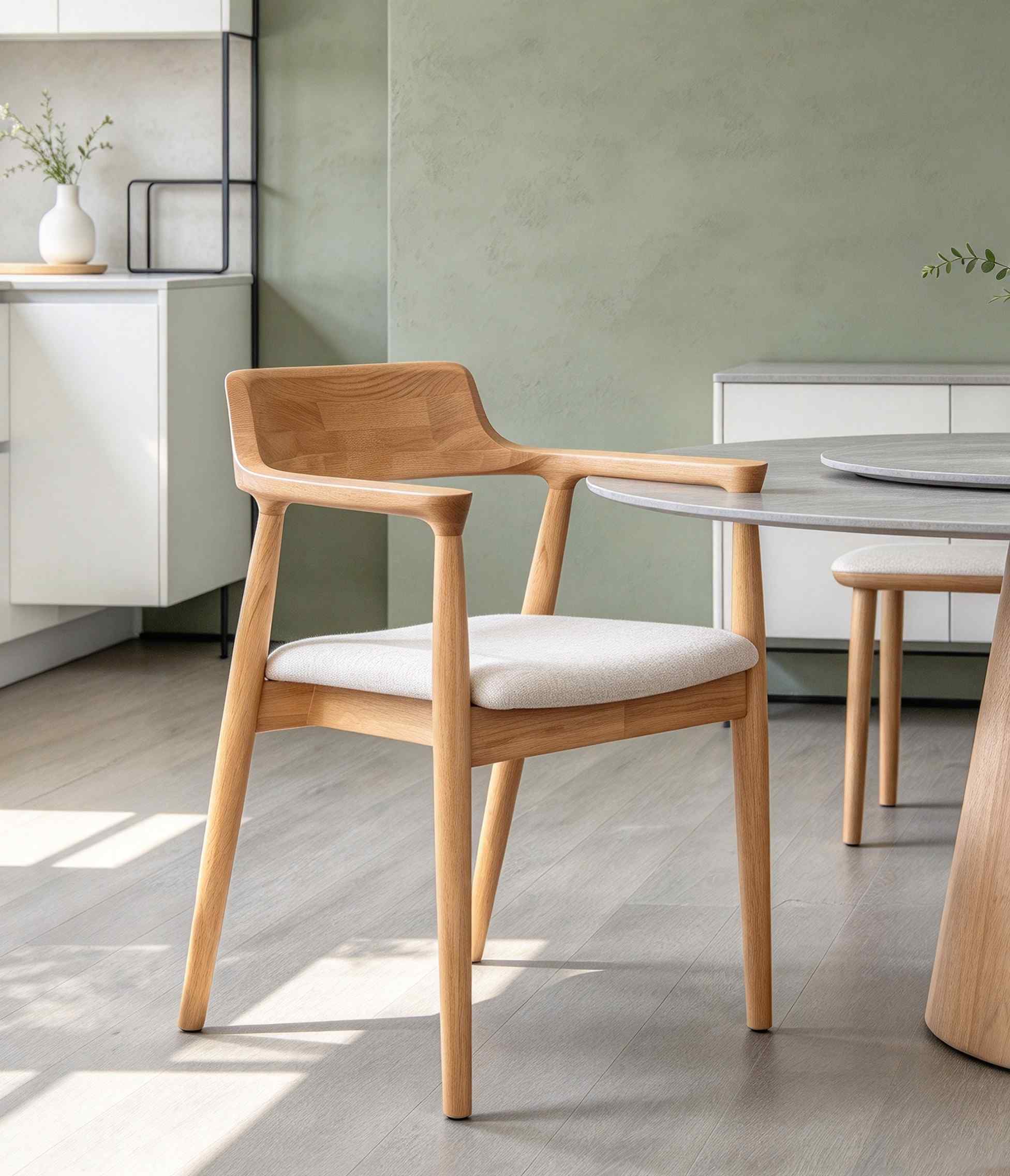
Die Revi 9024043 solid oak dining chair has a solid oak frame, fabric-and-foam seat, and a natural-finish option, making it a relevant example for hardwood-floor seating. The product page provides information about the frame and dimensions; however, there is no mention of the availability of either a felt or plastic cover. Customers need to confirm the leg-end shape and accessories with the manufacturer before assuming that a cover is provided based on the wooden legs of the chair.
Sample Checks for Homes and Hospitality Buyers
The chair should be placed on a clean piece of the flooring intended to be used and then moved through typical sitting and standing movements. Check for sound, catching, rocking, wear, and residue. All legs should be checked individually after testing. For restaurants and short-term rentals, incorporate the typical cleaning regimen because grit accumulation affects glide. Forest Furniture’s guide to commercial furniture selection mistakes also discusses the impact of furniture movement and maintenance on floor damage.
What Maintenance Keeps Chair Protectors Effective?
An efficient safeguard might not be effective at all if it is not regularly inspected. An efficient system of inspection is often more valuable than purchasing an expensive brand.
Cleaning Floors and Protectors Together
Ensure that you remove grit from the dining area frequently, particularly around the chair legs. Instead of sliding the chair on the floor, lift the chair when you move it to avoid damaging it. If the protective cover can be wiped, do that. Ensure that there are no staples or sharp edges in the cover. The damaged part of the leg should be fixed before adding a new protective cover.
Planning Replacements for Multi-Chair Spaces
It is recommended that retailers and facilities managers select fittings that can be easily recognized and replaced. In a restaurant where many customers gather, instead of replacing just the worn pads in the first chair that you come across, examine all the chairs regularly.Those details make it easier to maintain consistent protection across a dining chair collection without mixing unsuitable parts.
Why Work with Forest Furniture for Wooden Dining Chairs?
Waldmöbel supplies solid wood, upholstered, and other furniture to retailers, wholesalers, and commercial-project buyers. The company’s Revi chair is a good quality dining chair with an oak frame and a fabric cushion. When purchasing chairs for use in hard flooring situations, customers may specify the dimensions of the leg ends, suitable protectors, and packing requirements, in addition to the usual product specifications.
Schlussfolgerung
Using felt pads is usually a wise place to start when dealing with dining chairs with finished hardwood floors, especially if the pads are clean, the right size, and adequately secured. Plastic glide pads can be used with certain floors, but one cannot assume that all wood finishes will be safe for such glide pads. It is advisable to examine the chair legs, consult the floor manufacturer’s recommendations, and test the selected glide pad on a smaller section of the floor.
Häufig gestellte Fragen
Do Felt Pads Completely Prevent Hardwood Floor Scratches?
No. Even though felt makes the contact softer, if there is grit that gets stuck inside, old pads, or the fasteners are exposed, it can scratch the surface.
Are Plastic Chair Glides Safe for Hardwood Floors?
It all depends on the skate blade and the type of floor polish. Some of the tougher skate blades may mark wood floors, especially if they have grit in them.
Does the Revi Dining Chair Come with Felt Pads?
There is no information about the floor protectors in the published Revi spec. Verify the accessory and leg-end measurements before placing the order.
