

Navigating EU Import Tariffs and Logistics for Wholesale Furniture: Strategies for European Distributors
European distributors handling EU import tariffs and logistics for wholesale furniture regularly encounter a mix of regulatory hurdles and operational snags that can tighten budgets and stretch timelines. Fluctuating duties paired with shipping uncertainties often push margins thin, though targeted tactics help transform these obstacles into streamlined routines. This discussion explores the details of EU duties on bulk furniture shipments, frequent transport issues, hands-on methods to trim expenses and speed up processes, plus actual instances of effective imports. Distributors gain from grasping these aspects, allowing smarter choices that bolster reliable supply lines and sharp pricing across regions such as Germany, France, and the Netherlands.
Trade conditions within the EU have shifted toward emphasizing equitable competition alongside environmental goals, influencing tariff assessments and border procedures. A typical scenario involves a Belgian retailer bringing in solid wood dining ensembles, where duties hinge on material categorizations, and transit from Shanghai to Rotterdam might drag on without careful foresight. Tackling these calls for regulatory insight blended with practical maneuvers, keeping bulk dealings feasible amid international changes.
Understanding EU Furniture Import Tariffs and Regulations
Duties on imported furniture shape much of the EU’s approach to wholesale trade, aiming to shield local producers while welcoming standards-compliant overseas goods. Such levies hit products crossing into the unified market from outside the bloc, with percentages differing by item category and source. Furniture arriving from China commonly draws rates between zero and ten percent, tied to the Harmonized System code. Pieces like oak or rubberwood tables usually slot under HS 9403, pulling a standard 5.6 percent, whereas seats with leather or fabric coverings could see adjusted figures depending on elements involved.
The unified customs tariff applies evenly throughout the EU, yet trade pacts offer reductions. When a supplier in China meets criteria under broader investment deals or demonstrates significant local input, fees might ease. Looking ahead to post-2025, experts anticipate tweaks driven by persistent trade frictions, possibly nudging up charges for select groups to match eco-standards like those in the Ecodesign framework. That framework requires inbound furniture to satisfy efficiency and material guidelines, layering on extra checks. Importers of benches featuring metal supports risk inspections if timber lacks verified eco-origins, causing backups at entry points like Antwerp.
Added to duties come value-added taxes and potential excises at arrival. VAT spans 17 to 27 percent by country—modest in Luxembourg, steeper in Hungary. On a load of 500 fabric-covered chairs priced at €50,000, VAT could tack on €8,500 to €13,500. Anti-dumping measures also factor in, levied by the EU against underpriced shipments from China. Lately, these have zeroed in on bedroom sets with peaks at 216 percent, although most dining wholesales sidestep extremes through solid records.
Missteps in coding pose ongoing risks. Labeling a full-wood table as mixed could bump duties from 2.7 to 5.6 percent. Officials issue binding rulings to sort this, but securing one demands up to half a year. Wholesalers turn to the TARIC system for exact matches, accounting for features like composite surfaces or upholstery that shift groupings. With 2026 poised to extend carbon adjustments to furniture, emissions tracking could soon sway expenses, steering buyers toward greener Chinese options. This evolution highlights the value of forward-thinking duty management to sustain wholesale viability.
Standards for safety fall under REACH and product safety rules. Items treated with chemicals, including fire-resistant fabrics, need conformity statements. Failures invite confiscations, reminiscent of a 2024 case where a French bulk buyer forfeited €200,000 worth over unreported additives. European wholesalers benefit from alliances with specialized border agents, aligning documents to EU specs right from the start.
Beyond basics, the landscape includes preferences for certain origins. Furniture qualifying under free trade arrangements, say with Vietnam as a transit point, might dodge higher slabs. Yet, proving eligibility involves detailed supply chain traces, a task that pays off for repeat runs. In practice, distributors sourcing upholstered loungers often audit suppliers early to confirm compliance, avoiding last-minute scrambles at ports. Such prep work, drawn from years in the trade, turns potential pitfalls into smooth entries.
Regulatory shifts also tie into broader goals like circular economy pushes. Furniture designed for disassembly might qualify for lower assessments under upcoming rules, rewarding modular builds. Wholesalers eyeing long-term deals factor this, selecting partners who adapt designs accordingly. Data from recent EU reports shows compliant imports rising 15 percent in sustainable categories, signaling a market tilt toward eco-aligned strategies. For those in the wholesale game, staying ahead means blending tariff knowledge with these emerging priorities.
Common Logistics Challenges for Wholesale Importers
Transport issues stand out as major choke points for bulk furniture bring-ins from China to Europe. Paths from production sites in Tianjin or Guangdong to continental storerooms mix sea, rail, and road legs, each vulnerable to hitches that drive up outlays and disrupt schedules. Ocean carriage, managing over nine-tenths of these moves, grapples with backups at key docks like Rotterdam or Hamburg. Storms, labor actions, or gear shortfalls can stretch voyages from 25-40 days to beyond 60, much like a Dutch operation hit during 2024’s Red Sea diversions, which tacked on 10-15 days and €1,500 per box in extra charges.
Box shortages add another layer. Full loads fit large dining batches well, but partials for assorted seats and benches lead to grouping waits in hubs like Shanghai. Delicate goods, say chairs with stitched coverings, suffer from poor stacking, with claims jumping 20 percent in 2025 from mishandling. Ground hauls from harbors to interior spots in Poland or Italy pile on €500-€1,000 per trip, worsened by hauler deficits and fuel swings.
Border processing layers on administrative weights. Paper mismatches—absent bills or source proofs—spark detentions, with typical waits hitting 5-7 days. Wood-inclusive loads demand plant health certs to block bugs, but lapses cause turnaways. Recall a Spanish case with rubberwood benches stalled two weeks sans treatment docs, racking up €3,000 in hold fees.
Global politics heighten these strains. Stricter checks on Chinese outflows stem from tensions, while green mandates call for eco-sourcing evidence. Rail paths through major initiatives promise 20-28 day runs to mid-Europe but hit limits and steeper tabs—€4,000-€6,000 per unit against €2,000 sea rates. Bulk handlers balance these for savings, particularly on urgent hospitality setups.
Wrapping and care complicate further. Knock-down formats shrink space but need clear build guides, while hefty extendables require tough boxes to fend off scratches. Skipping moisture measures in rainy Chinese periods invites mildew on textiles, sparking send-backs that cut profits. In the field, these transport woes demand solid setups to protect wholesale flows.
Seasonal factors play in too. Peak times around holidays cram ports, pushing rates skyward. A veteran importer might recall 2023’s surge when container costs doubled, forcing reroutes to lesser-known entries like Gdansk. Such experiences teach the trade to forecast and diversify, spreading risks across carriers. Data points to a 12 percent rise in hybrid transport adoption among EU wholesalers, blending sea with rail for reliability. For those navigating daily, understanding these patterns proves essential.
Insurance gaps often surface as hidden threats. Standard policies cover basics, but specialized furniture risks—like fabric tears from vibration—need add-ons. One Italian distributor learned this after a stormy crossing ruined a load of armchairs, with partial coverage leaving €5,000 uncovered. Building comprehensive plans, including real-time monitoring, helps mitigate. The industry sees more tech integration, with GPS tags cutting loss rates by 25 percent in tracked shipments.
Actionable Strategies to Minimize Costs and Delays
Step 1: Accurate Tariff Classification and Documentation Preparation
Cutting duty expenses begins with spot-on code assignments. Tap EU portals to verify slots; a walnut-accented seat could land under 9401.61 for reduced levies if padded. Lock in advance rulings for steady inflows, curbing doubts. Link with Chinese makers providing source docs to tap preferences, possibly trimming rates 2-4 percent.
Thorough prep includes compiling full sets—invoices, packing lists, and conformity proofs. Distributors who file electronically via single windows shave days off processing. In one routine operation, a Belgian firm digitized submissions, halving clearance times for monthly chair loads.
Step 2: Optimizing Shipping Routes and Modes
Pick paths suiting scale and haste. For west Europe, ocean from Ningbo to Felixstowe stays budget-friendly at €1,800-€2,500 per big box during calm stretches. Fold in rail for enclosed zones like Austria, trimming 10 days from pure sea hauls. Adopt terms like FCA to hand off loads, dodging extras. Monitor live with apps to sidestep snags, as a German wholesaler managed in 2025, shifting amid canal troubles to pocket €10,000.
Mixing modes pays for varied inventories. A hybrid sea-rail for mixed wood and metal pieces cut a French supplier’s timeline by 20 percent last year, balancing cost with speed for retail restocks.
Step 3: Enhancing Supply Chain Visibility and Partnerships
Forge straight bonds with cargo handlers versed in furniture. They manage partial groupings, lessening harm via custom cushions. Roll out monitoring setups for full oversight, catching jams soon. Spread vendors over Chinese areas to cushion local upsets, keeping steady streams of hybrid designs.
Regular audits with partners ensure alignment. One Dutch operation conducts quarterly reviews, spotting inefficiencies that saved 8 percent on annual logistics for bench imports.
Step 4: Compliance with Sustainability and Safety Standards
Match Ecodesign by pulling certified timbers, evading projected carbon fees of €50-€100 per emission ton come 2026. Run external checks for chemical rules, blocking stops. This initial outlay, €500-€1,000 per group, wards off bigger hits.
Integrate green tracking from source. Wholesalers partnering with audited factories report smoother entries, with rejection rates dropping 30 percent in compliant runs.
Step 5: Cost Negotiation and Financial Planning
Haggle volume deals with shippers, targeting 10-15 percent cuts on yearly amounts. Shield from money shifts with forwards, steadying USD-based pays. Total all final costs—levies, taxes, moves—to set keen prices, like a UK handler who gained 8 percent edges via such tallies.
Forecasting tools aid in budgeting. Industry software predicts rate swings, allowing pre-buys at lows, a tactic that buffered a Spanish distributor against 2024’s fuel hikes.
Applying these phases cohesively can drop total bring-in spends by 15-20 percent, reshaping hurdles into wholesale efficiencies.
Extending strategies involves tech like blockchain for transparent chains. Early adopters in Europe track from factory to dock, reducing disputes by 40 percent. For bulk players, this tech edge sharpens competitiveness in tariff-heavy arenas.
Case Studies: Successful EU Imports from Chinese Manufacturers
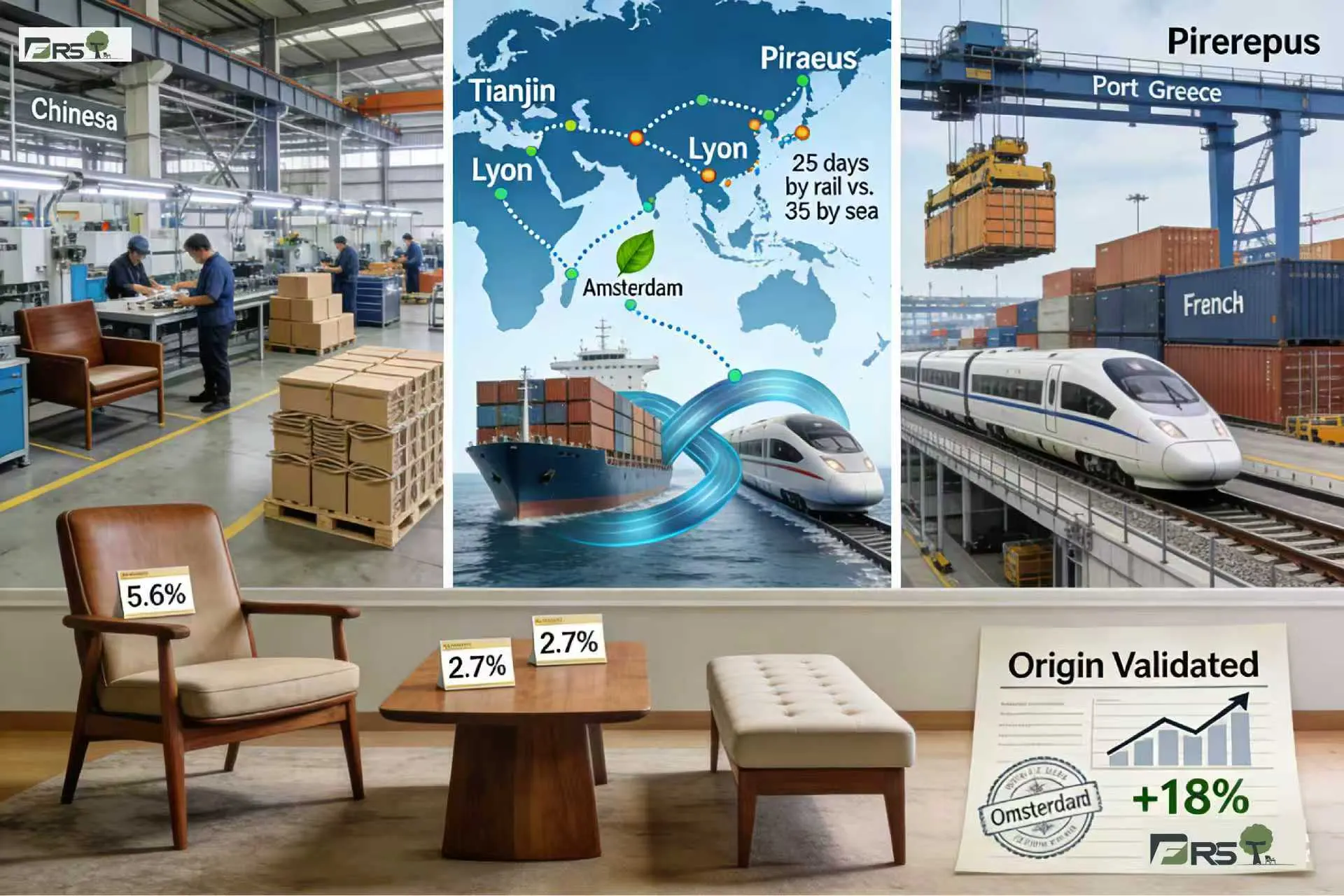
Real-world wholesale furniture dealings show how duty and transport mastery delivers wins. Take a Greek mid-level handler pulling in wood armchairs. Grappling with 5.6 percent on seat codes, they teamed with a Tianjin producer to fine-tune papers, grabbing lower rates through origin validations. The move used full-box ocean from Tianjin to Piraeus, with collapsible formats slashing box counts 20 percent. The €150,000 batch passed borders in four days, thanks to upfront plant certs. This not only curbed spends but grew their eatery supplies, lifting yearly takes by 12 percent.
Another example features a French lodging outfitter sourcing padded benches. Duties at 2.7 percent got handled via mixed-material tags, with carbon prep securing low-impact proofs. Rail from north China to Lyon trimmed travel to 25 days over 35 by water, at €800 extra per box but warranted by deadlines. Harm fell below one percent with sturdy wraps, sparking follow-ups and 15 percent savings versus past pulls.
A Dutch seller bringing in wood-metal desks maneuvered dumping probes by vetting for fair costs. Sea-rail mix from Guangdong to Amsterdam pared fees 10 percent, with digital watches dodging a labor stop. Chemical statements smoothed safety checks, yielding timely office expansions and 18 percent profit upticks.
These illustrate that triumphs arise from fused tactics, pairing duty smarts with transport accuracy for dependable bulk results.
Further cases underscore adaptation. An Italian retailer shifted to sustainable lines amid Ecodesign ramps, importing oak tables with certs that eased duties. Logistics tweaks, including consolidated partials, cut delays 25 percent, bolstering hotel contracts. Such shifts reflect industry trends toward resilient, compliant chains.
In Central Europe, a Polish wholesaler faced winter routes but optimized with heated containers for fabric pieces, preventing moisture woes. Tariff strategies via pacts saved 5 percent, turning seasonal challenges into steady supplies for retail networks.
Introducing Forest Furniture: A Reliable Partner in Wholesale Manufacturing
Δασικά έπιπλα holds a solid spot in the international bulk furniture scene, rooted in Tianjin, China, with operations spanning northern areas. Focusing on wood and padded items, it merges making and trading to cater to business clients globally. Offerings span dining surfaces like the Xander rectangular in black composite and metal, fitting 6-8 seats, plus seats such as the Kiva in rubberwood with curved supports and soft covers. Padded choices, like the Omar with firm legs and high-grade hides or textures, stress endurance for business settings.
Emphasizing custom builds through OEM/ODM, Forest Furniture tailors to area needs, drawing on eco-timbers like oak and walnut from managed stocks. Shipping to Europe, Middle East, and more, it upholds strict quality and joins events like Shanghai expos to highlight advances. This framework makes it a steady pick for handlers seeking tough chains and market-matched goods.
Production spans 20,000 square meters, churning out 500 containers monthly. Certifications cover FSC for sustainability and ISO for quality, aligning with EU demands. Custom runs allow tweaks like color matches or size adjustments, aiding distributors in diverse markets.
Συμπέρασμα
Grasping EU import tariffs and logistics for wholesale furniture involves deep dives into rules, forward tactics, and practical uses. Through exact product slots, route tweaks, and standard matches, handlers cut spends and skip holdups markedly. These moves safeguard edges and nurture maker ties, setting paths for ongoing expansion in Europe’s shifting arena. For handlers gearing up to hone methods, tapping seasoned exporters’ custom fits can tip scales in tight wholesale fields.
Συχνές Ερωτήσεις
What are the current EU import tariffs on wholesale furniture from China?
EU tariffs on wholesale furniture from China differ by code, usually 0-10 percent. Wood seats like dining ones often hit 5.6 percent, padded at 2.7. Preferences kick in with origin meets, but dumping adds for some. Scan TARIC for details to steer clear of shocks.
How can European distributors handle logistics challenges when importing wholesale furniture?
Logistics snags like dock waits and harm get tackled via mixed sea-rail paths, full loads for bulk, and handler teams for watches. Early paper prep and tough wraps aid, possibly trimming China-Europe runs 10-15 days.
What strategies minimize costs for EU wholesale furniture imports?
Minimizing costs means grabbing rulings for duty clearness, haggling freight volumes, and syncing with green suppliers to skip carbon tabs. Path spreads and money hedges can trim 15-20 percent total, securing sharp prices for handlers.
How do I ensure compliance with EU regulations for imported Chinese furniture?
Compliance demands chemical statements for REACH, wood certs for FSC, and eco-proofs for design. Outside checks and border pros ease this, curbing stops and levies at entry.
What role do case studies play in planning successful EU imports of wholesale furniture?
Case studies lay out real moves, like collapsible cuts to ship space or rail for quick drops. They steer handlers to mimic wins, such as a Greek boost of 12 percent takes via tuned duties and transports.
