

Furniture Maintenance Costs in Commercial Spaces: What Buyers Often Miss (and How to Budget for It)
In large-scale commercial projects, furniture maintenance is not a “nice-to-have” line item—it’s a recurring operating cost that shows up as labor, downtime, replacement parts, and sometimes a rushed re-buy that blows up a carefully planned budget. This article breaks down furniture maintenance costs in commercial spaces in a way procurement teams can actually use: why the numbers get underestimated, how high-traffic seating and lobby soft seating drive most of the spend, what a defendable budget model looks like, and when “repair” quietly becomes more expensive than “replace.”
For buyers managing multi-location spaces, the stakes are even higher. A small miss on maintenance assumptions doesn’t stay small when you replicate it across sites, floors, or properties.
The cost stack: what “maintenance” really includes in commercial spaces
Most buyers think maintenance equals cleaning. Cleaning is part of it, but it’s rarely the full picture, especially once you’re managing high-traffic areas or public-facing spaces where furniture is used hard and judged fast.
Routine cleaning is the obvious layer: daily wipe-downs, weekly vacuuming, and quick spot treatment. The next layer is deep cleaning, which tends to hit soft seating the hardest because fabric and seams collect oils, dust, and stains in a way hard surfaces don’t. In practice, deep cleaning is where you start seeing invoices that feel out of proportion to the original purchase price; national pricing guides for upholstery cleaning often show an average around $174 per piece, with common ranges roughly $120–$231, depending on item size, fabric, and service approach.
Then come the “small repairs” that do not feel small when they interrupt operations. A loose joint on a bench, a squeaky chair base, a caster that starts shredding on a hard floor, an arm pad that cracks and flakes—these are nuisance failures, but they produce real labor and real downtime. Some repair-cost guides put basic office chair repairs (tightening, lubrication) in a $50–$150 zone, with part replacements ranging from casters to armrests and mechanisms moving costs up from there.
Finally, there are early replacements and refresh cycles. That is maintenance, too, even if the accounting code says “capex.” When a lounge sofa looks tired six months earlier than expected, the business impact is immediate: reception areas look neglected, complaints increase, and cleaning crews spend more time trying to “save” a surface that’s already past its prime.
From our experience in commercial furniture manufacturing, the reason maintenance budgets surprise people is not that teams are careless. It’s that maintenance costs sit across departments—facilities, housekeeping, operations, and procurement—so no single owner sees the whole stack until it’s already happening.
Why buyers underestimate commercial furniture maintenance cost
The most common underestimation starts with usage. A chair in an executive office might live a gentle life. The same model used in a training room, co-working zone, or busy reception gets dragged, bumped, cleaned more aggressively, and cycled by different users all day. That difference changes wear rates and, in turn, maintenance spend.
The second miss is assuming that “average lifespan” applies to your building. Many sources cite a broad office chair lifespan range of roughly 5 to 10 years, with higher-quality seating lasting longer depending on use and upkeep. In the real world, high-traffic seating can fall on the short end of that range, sometimes sooner if floor surfaces, cleaning chemicals, and user loads are tougher than expected. If you budget replacements using a single average, your plan is already shaky.
The third miss is parts availability. A chair that is designed with replaceable wear components—casters, glides, arm pads, certain mechanisms—can be kept in service with predictable costs. A chair without that ecosystem can turn a minor failure into a full replacement, not because the chair is “bad,” but because it isn’t service-friendly for commercial use.
The fourth miss is soft seating math. Buyers often budget for a periodic clean and stop there. Yet upholstery maintenance is shaped by the business hours of the space, the rule that cleaning can’t disrupt guests or staff, and the reality that certain stains trigger emergency service calls. The invoice reflects that, and the annual cost adds up faster than many procurement plans assume.
In large-scale commercial projects, these misses compound because you repeat the same assumptions across floors, departments, or sites, and a small forecasting gap becomes a real number.
High-traffic seating: the maintenance costs that add up fast
If you want to understand office furniture maintenance cost in one place, start with seating used by many people. Chairs and benches are touched constantly, moved constantly, and blamed constantly. They are also the category where small failures create outsized operational friction.
Where seating fails first, and what it really costs
Most commercial seating problems start at connection points and wear surfaces. A bench loosens at the frame joint and begins to wobble. A chair caster drags and leaves marks, so someone swaps it with a random replacement that doesn’t fit correctly. An arm pad cracks, and suddenly users complain about comfort, not because the chair “stopped working,” but because it stopped feeling acceptable.
The direct cost is the repair visit or internal labor time. The less visible cost is disruption. Someone has to notice the issue, tag the chair, move it out of service, find a replacement, and coordinate repair or disposal. If your team is running a site with shared workstations or a busy training room, that cycle repeats.
Repair pricing varies widely by mechanism and parts, but it’s common to see basic fixes priced in a lower band and part replacements pushing the bill upward; one repair-cost breakdown lists simple repairs around $50–$150, while replacements like pistons, upholstery work, or major frame issues can move costs higher depending on scope.
Replacement cycle isn’t one number
Procurement teams often want a single answer: “How long will these chairs last?” The honest answer is: it depends on where you put them and how you run the space.
General guidance often places office chair lifespans around 5–10 years in typical use, with variability by build quality, usage intensity, and maintenance. But in high-traffic areas—shared desks, reception, meeting rooms with constant turnover—wear arrives earlier. The costs show up as frequent small repairs at first, then as a replacement wave that can feel sudden even though it was predictable.
For buyers managing multi-location spaces, this is where standardization helps. If you choose seating designed for commercial wear and plan a parts-and-inspection routine from day one, you trade surprises for a controlled replacement cadence.
A practical maintenance schedule that doesn’t waste effort
A schedule is useful only if it matches how people behave. In a busy office, you can’t rely on “someone will report it.” You build quick checks into normal operations and save deep work for planned windows.
Maintenance checklists commonly recommend a rhythm that looks like quick daily checks and cleaning, weekly cleaning, monthly inspection, quarterly deep cleaning, and annual evaluation for replacement planning—adjusted to the space and use intensity. The commercial point is not the calendar itself; it’s that a consistent schedule reduces the number of urgent incidents and makes your annual spend easier to forecast.
When you are selecting seating for shared work zones, meeting rooms, reception, or training areas, it is worth treating high-traffic seating as its own category of requirements—not just “chairs we like,” but seating built for daily use and serviceability. Forest Furniture’s CHAIR & BENCH category is structured around B2B supply for seating types that buyers commonly place in active spaces, including upholstered chairs and benches.
Lobby and lounge soft seating: cleaning costs and hidden fees
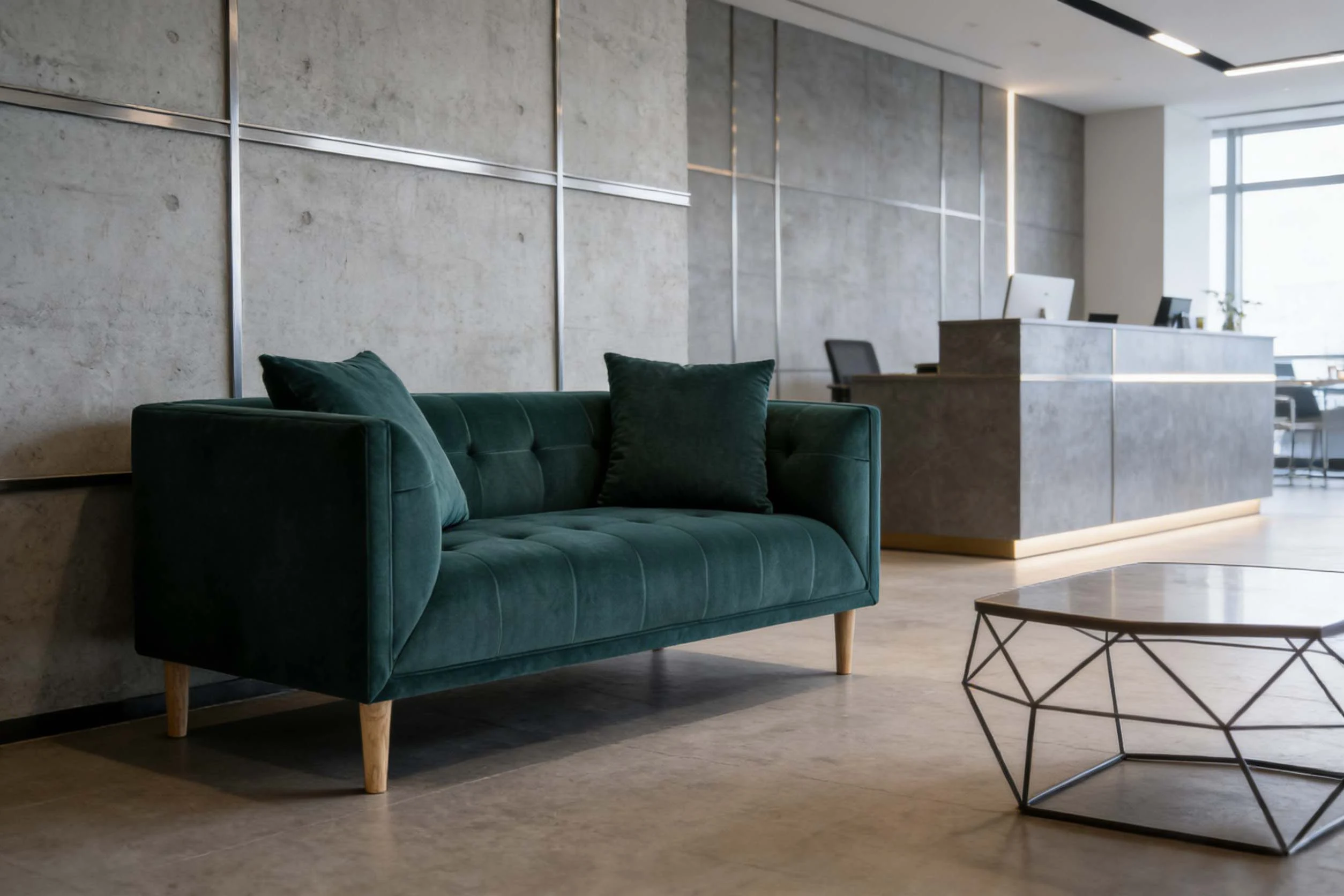
Soft seating has a different cost profile than task seating. With sofas, ottomans, and lounge pieces, the maintenance cost is often driven by cleaning and appearance control, not mechanical repair. And because these pieces usually live in public areas, your tolerance for “good enough” is lower.
Upholstery cleaning cost ranges you can budget with
A practical way to budget is to start with credible national ranges, then adjust for your environment. Several consumer pricing guides converge on similar ranges for professional upholstery cleaning: commonly $120–$231 per piece, with averages around $174, and higher totals for larger pieces or specialty materials.
Even if your commercial arrangements differ from residential pricing, these ranges are a useful baseline because the drivers are the same: size, fabric type, stain complexity, and access conditions. If your lobby sofa is oversized, if the fabric is delicate, or if cleaning must occur outside business hours, you should expect the annual number to rise.
The hidden fees buyers miss
The invoice for a lobby clean is rarely just the base price. There may be minimum service charges, added labor for moving heavy pieces, limitations that require after-hours work, or extra steps when stains are set or when the piece has deep seams and complex shapes. Those costs become more likely when the space is busy and staff can’t easily block off an area for half a day.
In large-scale commercial projects, the “hidden fees” aren’t only vendor fees. They include internal coordination time and the cost of taking seating out of service when a public area still needs to function.
Preventive choices that reduce cleaning frequency
The most reliable way to lower soft seating maintenance cost is not to clean more; it’s to plan the right materials and construction for how the space is used. If your lobby gets food and coffee, if guests wait with luggage, if kids sit on arms, then the fabric and seam strategy matters as much as the silhouette.
This is where procurement language helps. Instead of approving “gray fabric,” specify cleanability expectations, abrasion performance suitable for public use, and a finish that can take your actual cleaning process. If your operation uses strong disinfectants, the upholstery needs to tolerate them without fading or stiffening prematurely.
For reception areas, lounges, and public waiting zones, it is smart to evaluate sofas & ottomans with maintainability in mind—fabric performance, cushion recovery, and construction details that make deep cleaning and long service life more realistic. Forest Furniture positions its SOFA & OTTOMAN category as a B2B supply range that includes sofas, sofa beds, corner sofas, ottomans, and poufs, which are common building blocks for commercial lounge areas.
Build a maintenance budget procurement can defend
A defendable budget does two things. It reflects reality in the building, and it gives decision-makers a logic they can repeat.
Start by budgeting at the zone level, because zones determine use intensity. A reception lounge with two sofas and four occasional seats will likely have a different maintenance profile than a private office, even if the pieces are similar. Then translate zone-level assumptions into annual numbers: routine cleaning labor, scheduled deep cleaning events, expected small repairs, and a replacement reserve.
A simple example shows why this matters. Imagine a mid-size office with a busy reception area and a handful of meeting rooms that stay booked. If you plan quarterly professional upholstery cleaning for lobby pieces, using the $120–$231 per-item range as a baseline, and you add periodic chair repairs that fall into the $50–$150 band, you quickly see that “maintenance” is a four-figure annual spend even before you account for staff time and downtime. Multiply across multiple sites and you understand why the maintenance budget is a strategic procurement issue, not a facilities footnote.
For buyers managing multi-location spaces, the replacement reserve is the piece that prevents panic. If you assume all seating lasts the same number of years, you get replacement spikes. If you stagger replacement planning based on traffic intensity, you smooth the spend and avoid last-minute buying.
Repair vs replace: a decision rule teams actually use
The repair-versus-replace decision is not purely financial. It’s a blend of safety, predictability, and operational disruption.
If the issue affects stability or safety, replacement is usually the right call. If a chair keeps failing the same way—casters repeatedly breaking, frame joints loosening, mechanisms sticking—then even a “cheap” repair becomes expensive because the failure repeats and staff lose patience. If parts are hard to source or inconsistent, repair turns into a scavenger hunt.
Lifecycle guidance for office furniture often spans broad ranges based on usage and maintenance, and that variability is precisely why repair decisions should be tied to the zone. A low-traffic executive chair might justify a more involved repair. A reception chair that fails twice in a year is signaling that your environment is too harsh for that build, or that the product needs a more service-friendly design.
From our experience in commercial furniture manufacturing, the cleanest repair-versus-replace rule is the one that keeps your team moving: if the repair cycle is frequent enough to create ongoing disruptions, replacement is often cheaper in total cost, even if the unit price stings.
Preventive procurement: how to spec furniture to lower maintenance costs
The best time to reduce maintenance cost is before you purchase. This is where procurement teams win, because good specs turn maintenance from a reactive chore into planned upkeep.
For seating, write requirements around serviceability: replaceable wear parts, floor-surface-appropriate glides or casters, stable joints, and finishes that tolerate frequent cleaning. For lounge pieces, write maintainability into upholstery selection: fabrics that match your cleaning routine, construction that keeps seams stable, cushion fill that recovers, and frames that don’t loosen under daily use.
Forest Furniture’s company profile describes a manufacturing and export operation headquartered in Tianjin, with factories and production lines across northern China, and a product range covering solid wood, upholstered furniture, and panel furniture for global B2B partners. In practice, that kind of production footprint matters for buyers because consistent materials, consistent finishes, and freight-ready packaging can reduce damage risk and rework costs in commercial delivery cycles, especially when you’re shipping to multiple markets.
About Forest Furniture
muebles forestales is a furniture manufacturing and export company headquartered in Tianjin, China, with factories and production lines established across northern China to support production capacity and consistent quality. The company’s product range includes solid wood furniture such as wood chairs and tables; upholstered furniture including upholstered chairs, beds, lounge chairs, sofas, and ottomans; and panel furniture such as shelves, cabinets, MDF tables, and tables with tempered glass, sintered stone, or glass stone tops. Forest Furniture works with furniture retailers, wholesalers, online sellers, and organizations supplying furniture for hotels and short-term rentals, serving customers across regions including Europe, Southeast Asia, the Middle East, Australia, the UK, South Korea, Japan, and Russia.
Conclusión
Furniture maintenance costs in commercial spaces become manageable when you treat them as a system instead of a surprise. High-traffic seating drives repair cycles, parts spend, and disruptive downtime; lobby soft seating drives cleaning frequency, appearance control, and hidden coordination costs. When you budget with the full cost stack in mind—routine work, deep cleaning, repairs, parts, and replacement reserves—you can defend your numbers and avoid the ugly “why didn’t we plan for this” conversation mid-project. For teams building a practical plan, the quickest wins usually come from selecting service-friendly high-traffic seating for active zones and maintainable sofas & ottomans for public-facing lounges.
Preguntas frecuentes
What are the biggest furniture maintenance costs in commercial spaces?
The biggest furniture maintenance costs in commercial spaces usually come from two places: seating that sees constant daily use and soft seating that requires periodic deep cleaning to stay presentable. Beyond cleaning, the hidden drivers are small repairs, replacement parts, and internal labor and downtime when items are taken out of service.
How do I estimate office furniture maintenance cost for high-traffic seating?
A workable estimate starts with the traffic level of the zone. Shared work areas, meeting rooms, training rooms, and reception spaces tend to drive more frequent inspection and more frequent repairs. Use a baseline for basic repair events—many repair-cost guides cite simple office chair repairs in the $50–$150 range—and then add a reserve for parts and early replacements in the busiest zones.
What is the typical upholstery cleaning cost for lobby sofas and lounge seating?
Professional upholstery cleaning prices vary by size, fabric type, and stain level, but common national ranges are about $120–$231 per piece, with an average around $174. Larger sofas, complex shapes, and after-hours service can push the annual cost higher in commercial settings.
When does it make sense to repair vs replace commercial seating?
Repair makes sense when the issue is isolated, parts are readily available, and the fix restores reliable service without repeated downtime. Replacement usually makes more sense when the problem affects stability or safety, when the same failure keeps returning, or when parts and labor turn a “quick fix” into a recurring disruption—especially in high-traffic zones where reliability matters more than squeezing out the last bit of lifespan.
