

What Should Buyers Confirm When Sourcing Upholstered Rubber-Wood Dining Armchairs?
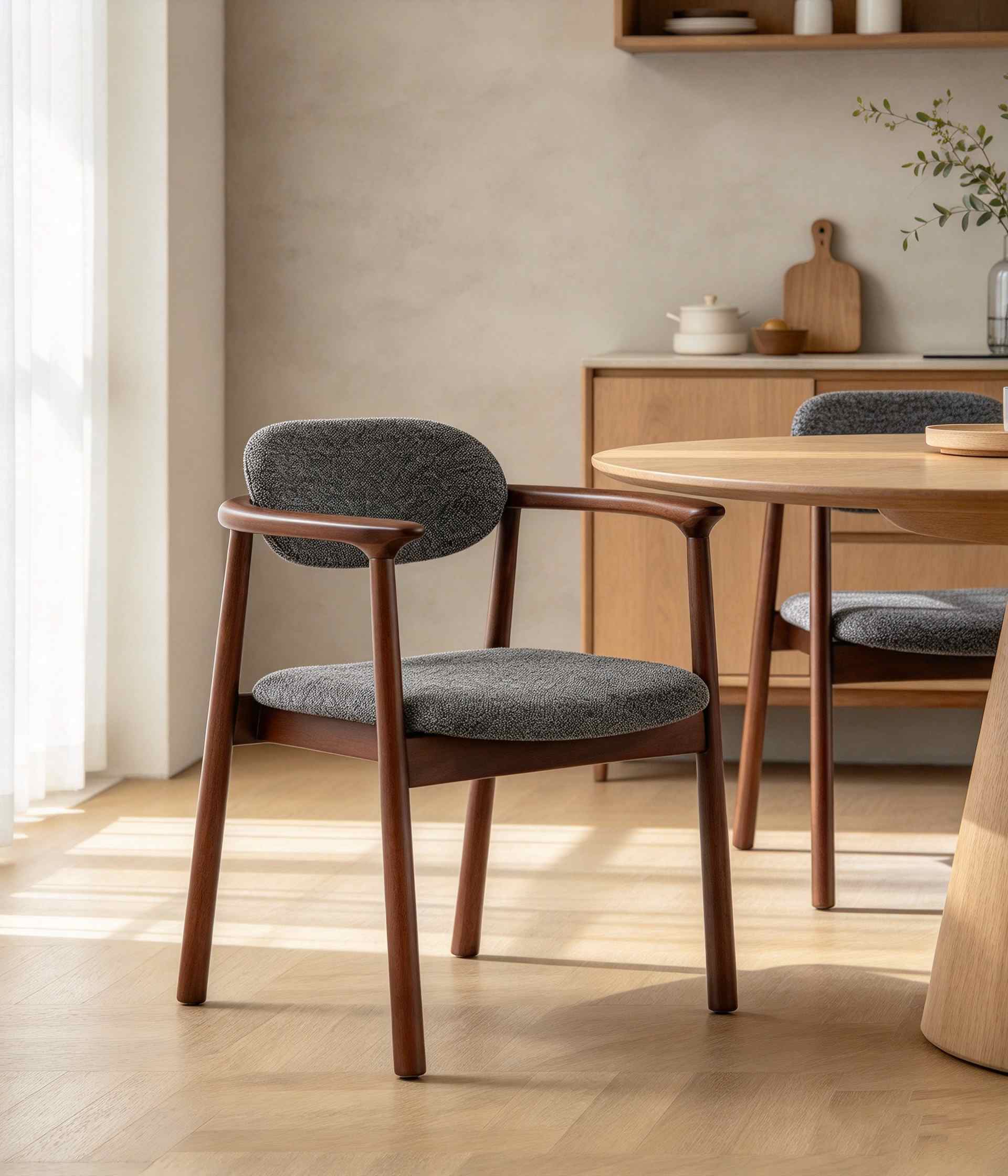
“Walnut, grey seat, with arms” sounds like a chair specification until someone has to buy from it. Which wood? Which grey? And what arrives assembled? That’s where I’d pause before ordering. Take the Kiva Dining Chair: rubber wood is the frame species, and the seat uses fabric and foam. The packing is listed as semi-knockdown. Each fact answers one question and opens another. An upholstered rubber wood dining armchair order needs a reference everyone can point to, from the person choosing the fabric to the person opening the box.
Where Can a Short Material Label Go Wrong?
The finish is the obvious place. Kiva lists walnut as a color option, while the frame material is rubber wood. Those are different entries. Put them together casually and you could end up promising walnut wood in an online listing without ever intending to.
Keep Species and Stain Apart
My order sheet would have a line for “solid rubber wood frame” and another for the approved finish reference. The retail copy should make the same distinction. A stain name doesn’t tell an inspector what variation the buyer accepted, either. For that, I’d keep a sample and photographs showing the arms and back as well as the legs.
Give the Fabric a Proper Reference
A grey chair in a catalog might be enough to start a discussion. It isn’t enough to repeat an order months later. I’d ask for the fabric code and keep the actual swatch with the approval file. If the seat and back use different covers, that belongs in the file too. The next buyer shouldn’t have to work out which fabric was meant by scrolling through old messages.
What Would You Learn from Sitting in the Sample?
Quite a lot that a swatch can’t tell you. A hand pressed into foam feels different from a person seated at a dining table. I’d try the assembled chair before approving the upholstery, with enough time to shift position and notice the front edge.
Name the Discomfort if There Is Any
Suppose the sample feels firm at the front and soft in the middle. That’s a useful observation to send back. “Make it more comfortable” gives the supplier far less to work with. I’d ask how the cushion is specified and what reference the factory will use for subsequent production. The agreed feel needs to stay attached to the foam specification and finished sample.
Try It Where It Will Be Used
Kiva’s published seat height is 430 mm. I’d use that for a shortlist, then bring the sample to the intended table. How much room is left beneath that table when somebody sits down? That’s worth seeing for yourself. I’d use the same table throughout a comparison of столовые стулья, then note what changes from seat to seat. Otherwise a different apron or tabletop can quietly change the result.
What Would Make You Send a Sample Back?
A rough armrest would send the sample back for correction. I’d mark the spot in a photograph, then approve the corrected version. A note saying “fix in production” leaves the inspector without a finished reference.
The same fabric can look rather different once somebody has pulled it round a cushion. I’d keep photographs of the finished seams, from left and right, so the reference shows the sewing as well as the cloth. Otherwise, what exactly has the inspector been asked to match?
A rocking chair on a flat floor would concern me, as would a loose joint. I’d ask which connections leave the factory assembled before planning the sample trial. The customer’s assembly work needs a trial too. And I’d keep the question of a commercial rating separate: a sturdy feel isn’t the documentation for one.
What Does SKD Leave for the Customer?
SKD appears on Kiva’s product page. It’s short for semi-knockdown, so the chair isn’t being offered as a fully assembled delivery in that listing. Fine, but which bits are in the box separately? A packing inquiry can request a parts list and photograph before you decide whether the format suits your sales channel.
Open the Box Without the Demonstration
I’d hand the box to somebody who missed the demonstration and watch them work from the sheet. They might understand a drawing immediately; they might turn it round several times and ask which way a part faces. Either way, the trial tells you something. A missing tool is another question to resolve with the supplier before approving the contents.
After that trial I’d bring the chair back to the flat floor. I’d also keep the empty carton for a few minutes. The spaces between its protective pieces reveal where parts might touch; a loose hardware pouch near upholstery would get my attention. Where did the wooden pieces touch? Photographs of the agreed layout give warehouse staff a much clearer reference than “packed carefully” on an order sheet.
What Is Worth Saving After the First Delivery?
The sample file. I’d label the swatch and finish sample with the order number straight away. Six months later, an unmarked grey swatch isn’t much help. An assembled reference chair would be worth keeping as well, if there’s room. It gives the next buyer something to sit in rather than just somebody else’s notes.
I’d keep instruction-sheet changes alongside the material approvals. If your team corrected a confusing assembly drawing, that correction ought to reach the next shipment. Some of Kiva’s commercial fields are blank in the listing. I wouldn’t build a purchasing schedule around them. Minimum quantities and delivery terms belong in the current quote, where both sides can agree what applies to this order.

How Would You Brief Forest Furniture?
The solid wood and upholstery parts of this order both sit within Лесная мебель‘s published range. The company manufactures and exports furniture for retailers, wholesalers, and online sellers. Kiva is listed with material, color, and packaging customization; those are the options I’d raise with the supplier when discussing the fabric, stain, and box contents.
My first email would name Kiva and give the quantity and destination. Then I’d ask which upholstery swatches are available for the proposed order, how the SKD box is arranged, and what the current quote covers. No need to settle every detail in that email. The reply should help you choose what goes into the sample.
Вывод
The shorthand description is fine for a conversation across the office. For the order, I’d keep the species, swatch, assembled sample, and instructions together. The next person picking up the buying file ought to recognize the chair without having to ask what “walnut, grey seat, with arms” meant.
Часто задаваемые вопросы
Does the walnut option use walnut wood?
Walnut appears as a color option here. The listed frame is solid rubber wood. Both facts can go in the description, but the color shouldn’t replace the species.
Can I approve the seat from a swatch?
For the fabric itself, yes. For the feel of the cushion or the seam work, I’d need to try the finished chair. A square of cloth can’t tell me that.
Are assembly tools included in SKD packing?
Not necessarily. I would get the supplier to list the box contents, including any tools, before approving the packing. SKD on its own doesn’t answer that question.
