


Overcoming Supply Chain Disruptions in Middle East and South Africa: Bulk Furniture Procurement Tips for 2026
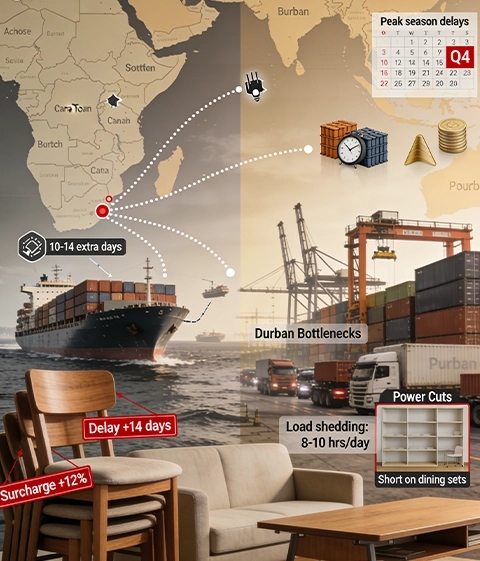
Supply chain disruptions in Middle East and South Africa keep weighing on bulk furniture importers straight through 2026, with Red Sea rerouting regularly stretching Asia-to-region sailings by ten to fourteen days, Durban terminals holding containers for weeks due to equipment or weather factors, and South African power cuts still slowing down trucking and warehouse turns. Wholesalers in the GCC and South African retail networks run into the same cycle repeatedly: Dubai or Riyadh hotel projects delayed because upholstered seating loads sit offshore longer than expected, Johannesburg showrooms short on dining sets during busy consumer windows, or surprise freight surcharges steadily trimming the margin on container quantities of chairs, extension tables and lounge pieces. These holdups arise from entrenched regional realities mixed with persistent global trade pressures, yet distributors who have managed several of these waves have honed a set of practical procurement routines that restrict schedule drift and keep landed costs from running away. The material that follows breaks down the leading causes, flags the sharpest risk zones, and walks through concrete, proven steps that support bulk furniture procurement tips when the environment stays unpredictable.
Freight behavior tells a large part of the story. Carriers taking the Cape route consume more bunker fuel over extended distances and frequently layer on higher war-risk premiums when alerts rise. In South Africa, berth congestion, crane limitations and seasonal weather at Durban and Ngqura continue pushing dwell times well past normal ranges. Furniture shipments—solid wood dining tables, fabric-covered seating, metal-hybrid constructions—feel these extensions more sharply than lighter cargo because of greater space use per container and lower tolerance for prolonged movement, humidity shifts or extra handling cycles. Teams handling hospitality deliveries or retail restocking therefore lean on structured countermeasures to maintain control.
Why Supply Chain Disruptions Hit Bulk Furniture Hard in Middle East and South Africa
Geopolitical tensions and Red Sea/Suez Canal rerouting continue applying steady downward force on the main ocean corridors furniture importers rely on. Vessels diverting around the Cape of Good Hope to reach Jebel Ali, Dammam or Durban push many transits significantly beyond the standard thirty-day mark. Bulk furniture registers that added duration more intensely because capital remains tied up longer in containers and the chance of minor cosmetic issues—scuffs on finishes, seam strain on upholstery—increases noticeably. Projects aligned with Vision 2030 schedules in Saudi Arabia or fast-moving retail and office developments in the UAE hold almost no slack for those extra days without generating downstream scheduling and cost ripple effects.
South Africa contributes its own persistent friction. Durban and Ngqura deal with ongoing equipment constraints, high berth occupancy and abrupt weather closures that routinely extend clearance beyond initial estimates. Grid power interruptions then delay container offloading, customs processing and final delivery, turning a planned port-to-warehouse transit into a sequence that can stretch several unplanned days. Wholesalers counting on steady container flows from China therefore carry heightened risk whenever local handling capacity falters.
Raw material price movements and strong dependence on imported supply chains amplify the overall exposure. Shifts in timber pricing for rubberwood or oak components, along with steel costs for metal accents, track global demand closely, while currency fluctuations in the GCC and South Africa change landed figures with minimal warning. In regions where imports cover sixty percent or more of furniture volume, those variables narrow the buffer against abrupt market changes.
Key Risks for Bulk Furniture Importers in These Regions
Shipping delays and cost spikes from route changes deliver the quickest and most direct impact. Longer ocean passages drive freight expenses higher during tense periods and raise the probability of handling-related defects on finished surfaces or stitched upholstery. A single extended voyage can shift a container of modern swivel dining chairs from acceptable arrival condition into territory where small imperfections become customer complaints or return triggers.
Inventory gaps and demand swings press hardest on hospitality and retail channels. GCC project calendars lock around fixed opening dates, so any delivery slippage creates chain reactions through the fit-out process. South African retailers building stock for seasonal peaks or promotional periods find irregular arrivals force either heavy safety stock or missed sales from empty displays.
Compliance and sustainability mandates keep tightening despite logistical challenges. Project requirements increasingly specify FSC-certified materials or controlled-emission finishes, yet disruptions make it more difficult to secure timely documentation or complete pre-shipment checks.
Supplier consistency gaps finish the main risk list. Manufacturers lacking deep experience on these lanes sometimes fall short on packaging upgrades for extended voyages or on production pacing when lead times vary sharply. Distributors operating with a limited set of partners therefore face greater exposure to quality variance or readiness shortfalls.
8 Actionable Bulk Furniture Procurement Tips to Build Resilience
Step 1 drives early diversification of shipping routes and carrier choices. Mapping Cape alternatives or hybrid rail options in advance lowers reliance on any one path. Keeping several forwarders active allows quick rate checks and contingency switches when lanes tighten.
Step 2 stresses buffer inventory and refined demand forecasting. Adding twenty to thirty percent extra on hospitality-critical orders builds necessary headroom against lengthened transits. Forecasting tools pulling from past lead-time records and regional sales patterns improve reorder precision without overcommitting capital.
Step 3 concentrates on deepening relationships with reliable Chinese manufacturers familiar with Middle East and South Africa shipments. Partners accustomed to heavier protective crating, moisture barriers and flat-pack breakdowns for these markets produce more uniform results. Regular production visibility and direct coordination keep timelines aligned.
Step 4 brings contractual flexibility and risk-sharing language into the mix. Clauses capping fuel surcharge exposure, defining rerouting duties and covering geopolitical force majeure events add real protection. Wholesalers who have secured these terms note they prevent escalation when sailings run long.
Step 5 considers partial regional or local sourcing where specifications and volumes align. Turkish upholstery production or Vietnamese metal framing can shorten effective lead times in GCC markets. South African buyers occasionally move certain finishing processes in-country to reduce full-container pressure.
Step 6 invests in continuous shipment tracking. Platforms monitoring containers from factory gate to final drop-off spot delays early. Alerts for weather holds or terminal congestion provide windows for corrective action.
Step 7 favors designs built for transit endurance and efficient packing. Flat-pack methods, reinforced corners and commercial-grade frames hold up better over long hauls with fewer claims. Solid wood dining tables and durable upholstered seating that arrive intact cut rework and customer friction.
Step 8 requires recurring risk assessments and scenario planning. Quarterly supply-chain mapping combined with drills on disruptions—twenty-day Red Sea closure, Durban labor action—keeps plans current and teams ready.
Applying these elements together has helped many wholesalers cap cost increases and hold delivery commitments.
Real-World Case Studies: Successful Procurement in Disruptive Times
A UAE hospitality buyer faced repeated Red Sea delays on lounge seating containers. Buffer planning, pre-set routing flexibility and a manufacturer experienced with protective wrapping allowed on-time delivery for a significant Dubai project. The voyage extended, but arrival condition remained solid and claims stayed minimal.
In South Africa, a retailer handling dining and bedroom lines dealt with ongoing Durban congestion. Adding rail support for portions of volume and upgrading tracking reduced lead-time variability. Inventory stability carried sales through a strong quarter without emergency expedites.
These results show that layered, intentional tactics turn disruptions from crises into factors that can be controlled.

Introducing Forest Furniture: A Reliable Partner in Wholesale Manufacturing
Forest Furniture operates as a specialized furniture manufacturer and exporter based in Tianjin, China, with production spread across northern facilities to support steady capacity. The assortment covers solid wood dining chairs and tables, upholstered lounge seating and sofas, and panel furniture including MDF tables with metal bases or glass inserts. Operations focus on consistent quality controls, full OEM/ODM services, and adaptability to sustainable material requests when required. Exports serve Europe, the Middle East, Southeast Asia and other regions, backed by manufacturing processes geared toward reliable volume and B2B alignment.
Conclusion
Supply chain disruptions in Middle East and South Africa remain a structural part of bulk furniture importing in 2026. Understanding the root drivers—from Red Sea route changes to South African port and energy constraints—and putting targeted procurement practices in place allows wholesalers to contain delays, steady costs and protect client relationships. The approaches laid out here, drawn from patterns seen across repeated cycles, provide a workable structure for more predictable performance in challenging markets. Distributors that integrate diversification, visibility and resilient designs systematically gain a clear edge.
FAQs
What are the main causes of supply chain disruptions for furniture imports in the Middle East in 2026?
Red Sea rerouting forced by security concerns, higher freight rates and insurance costs, and significantly extended transit times head the primary causes. Congestion at GCC terminals and raw material price fluctuations add further strain on bulk furniture shipments.
How can bulk furniture buyers in South Africa avoid port delays in Durban?
Buffer inventory, rail options for faster inland movement, and forwarders with strong local presence help mitigate delays. Continuous tracking catches issues early so adjustments can follow quickly.
What procurement tips help mitigate Red Sea shipping crisis impacts on GCC orders?
Carrier diversification, contractual provisions for rerouting and surcharge containment, and flat-pack designs with reinforced packaging reduce exposure. Long-standing relationships with Chinese exporters experienced on these routes improve reliability.
How to choose reliable Chinese furniture manufacturers for Middle East and South Africa markets?
Prioritize suppliers with proven delivery history to these areas, tight quality systems, and flexibility in packaging or timing. Regular audits and open dialogue confirm the partnership holds.
Does diversifying suppliers reduce costs during supply chain disruptions in these regions?
Diversification typically steadies pricing and lowers overall risk by avoiding heavy reliance on one source or lane. It creates better negotiation leverage and fallback options when disruptions hit.
