

Will Dining Armchairs Fit Under Your Table? Arm Height, Seat Height and Clearance Calculator
Picking dining armchairs based just on looks can lead to costly fitting issues. Your new chair might feature the perfect fabric, color, and width. However, it might still fail to slide fully under the table. This happens when the arms bump into the apron or the tabletop itself. You should check a few measurements before you place an order. Compare the lowest point underneath the table, the arm height of the chair, and the seat height. This guide provides an easy clearance calculator. It works well for everyday homeowners and professional furniture buyers alike.

Why Do Dining Armchairs Sometimes Fail to Fit?
Checking the official table height will not guarantee a good match. You must look at the actual open space below the top. The space around the base also matters. These factors decide if an armchair can slide in without trouble.
Does the Table Apron Reduce Clearance?
Lots of tables feature an apron, support rail, bracket, or extension gear right under the top surface. You need to measure from the floor up to the lowest solid obstacle. This obstacle must sit directly in the chair’s path. If you have an extension table, make sure to check the clearance in both the closed and fully open positions.
Can the Arm Shape Affect the Result?
Yes, it certainly can. Sloped or tapered arms might slide right under the table edge. This can happen even if the top back part of the chair is a bit taller than the table’s underside. On the other hand, straight or thickly padded arms require extra space. You should always measure the very front tip of the arm. That is the part that touches the table first.
Which Measurements Should You Take?
Stick to a single unit of measurement for your entire calculation. Using millimeters is a great idea. Tiny differences in size often decide if a chair will actually fit.
How Should You Measure the Table?
Take a vertical measurement from the finished floor. Go straight up to the lowest point underneath the table where the chair will enter. This spot could be the bottom of the tabletop, an apron, a frame, a bracket, or an extension rail. You should also measure the open width between the actual table legs.
How Should You Measure the Armchair?
Start at the floor and measure up to the tallest front part of the arm. Next, write down the uncompressed seat height. You also need the total width and the overall depth. Be sure to include any piping, thick seams, or rounded arm caps. These small details can add extra height.
How Does the Clearance Calculator Work?
Two basic math steps will give you a quick compatibility check. You should leave a sensible gap between the pieces. This extra margin helps stop ugly scraping. It also lets the chair move in and out with ease.
What Is the Arm-Clearance Formula?
Arm clearance = table underside height − chair arm height
Treat your final number as a handy guide:
- 25 mm or more:Plenty of comfortable room
- 10–24 mm:Probably going to fit, but you must double-check
- 1–9 mm:Extremely tight and very likely to bump
- 0 mm or less:The arms will definitely hit the table or fail to slide under
Aiming for roughly 1 inch is a solid goal if you prefer imperial numbers.
What Is the Seat-Height Formula?
Seat-to-table difference = tabletop height − seat height
A gap of about 250 to 300 mm usually creates a good dining setup. The space underneath the table must also offer enough room for a person’s thighs. People need space to move naturally. A bulky apron can make the seating area feel very cramped. This happens even if the main tabletop and seat heights look perfectly fine on paper.
What Does a Sample Calculation Show?
Let us imagine a table with a 760 mm top height. It has a 720 mm underside height. The armchair features a 695 mm arm height and a 470 mm seat height.
- Arm clearance: 720 − 695 = 25 mm
- Seat-to-table difference: 760 − 470 = 290 mm
This specific mix should give you decent arm room. It also offers a well-balanced dining height. If you plan to place bulk orders, you should still test a single sample first. Doing this before mass production remains the safest path.
Which Seat Height Works Best?
The height of the seat impacts your daily posture. It also changes your legroom and how easily you can move. You need to judge the seat height alongside the firmness of the cushion. The overall table construction matters just as much.
Should Upholstery Be Measured Compressed?
You should always use the uncompressed seat height when you compare product details. Very soft foam might drop your actual seated position. Meanwhile, firm foam will stay much closer to the official listed height. Commercial buyers ought to ask for a proper technical drawing. This step ensures every single model gets checked in the exact same manner.
Can Flooring Change the Fit?
Yes, it absolutely can. A heavy rug can lift the chair higher up against the table. Things like adjustable feet and floor protectors can alter the final gap. Uneven floors will do the same thing. Try to measure both furniture pieces in their exact final spots whenever you can.
What Else Should Buyers Check Before Ordering?
Having enough clearance is highly important. However, the design of the table base matters too. The layout of the surrounding room will also impact your daily use.
Is the Chair Narrow Enough Between the Table Legs?
Look at the widest part of the chair. Compare this number to the open space between the table legs or the pedestal base. You must leave some extra room on the sides. This lets users pull the chair out without hitting the table frame. Swivel armchairs demand even more space around them. Their seats rotate outward and take up more room than a standard stationary chair.
Should You Request a Sample or Technical Drawing?
Getting a physical sample is very smart for retail, hospitality, restaurant, or large project orders. A real sample proves the overall comfort and the finish quality. It also shows the true arm profile and the actual fit. Buyers need to ask for dimensional tolerances and carton details. You should also request material choices and customization facts before you approve any production run.
Why Choose Tianjin Forest Technology Co., Ltd. as an Armchairs Supplier?
A reliable B2B supplier needs to offer many different designs. They should provide very clear product details and strong customization support. Having real experience with professional furniture buyers is also vital.
What Armchair Options Are Available?
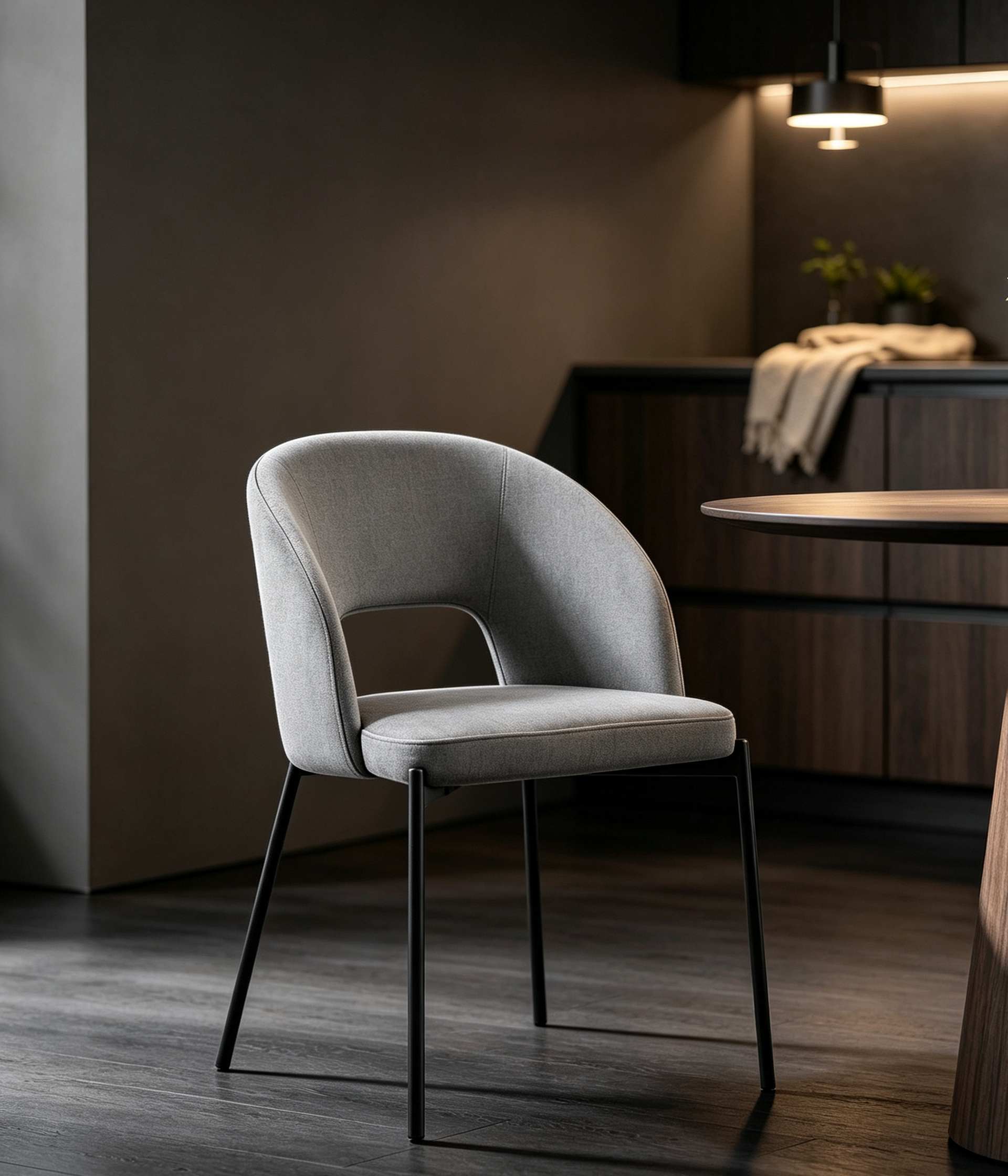
Tianjin Forest Technology Co., Ltd. supplies upholstered dining armchairs. These chairs come with nice features like metal legs, thickly padded arms, and smooth swivel bases. Their main product listings showcase many different sizes and seat heights. As a quick example, the Ziro model features a seat height of 495 mm. At the same time, the Eden model provides a seat height of 470 mm.
How Does the Company Support B2B Customers?
The company focuses heavily on furniture manufacturing and global export. Strong production resources located across northern China support these efforts. Their broad catalog features solid wood, upholstered, and panel furniture. These items are perfect for retailers, wholesale buyers, and online sellers. Hotels and rental-property suppliers in global markets also buy them. Clients can easily customize selected chair models by picking specific colors, materials, and packaging types.
Conclusion
A dining armchair fits right only when its arms safely clear the lowest point under the table. The seat height must also support a good dining posture. Furthermore, the overall chair width has to match the table base. You should calculate both clearance numbers carefully. Always leave a sensible safety margin. Finally, verify all sizes using a technical drawing or a real physical sample. These basic checks will cut down on costly returns and ugly scratches. They also prevent bad room layouts and angry customer complaints.
FAQs
Can I Use the Tabletop Height for the Clearance Calculation?
No, you cannot. The apron, inner frame, metal brackets, or extension gear might sit much lower than the actual tabletop. You must always use the lowest hanging object in the chair’s path. Do this every time you calculate your arm clearance.
How Much Arm Clearance Is Recommended?
Aiming for about 25 mm, or roughly 1 inch, is a great target for normal daily use. A smaller gap might still function okay. However, a tiny gap gives you much less room for error. It makes dealing with thick rugs, puffy padded arms, and uneven floors much harder. It also leaves no room for slight production differences.
What If the Chair Arms Are Slightly Too High?
You should pick an armchair that has lower or heavily sloped arms. Alternatively, you can select a table with a much thinner apron. Another simple fix is to place your armchairs only at the far ends of the table. You must avoid cutting the chair legs to make them shorter. Do not change any structural parts without getting advice from a trained furniture expert first.
