

Concrete-Look vs Real Concrete Dining Tables: Weight, Cleaning, and Durability Compared
When dining tables are constructed from concrete material, it provides the interior an industrial touch, but it doesn’t mean all the time that the surface of the table is made up of concrete. In some cases, there can be concrete imitation on the surface of the table and it may be engineered wood material, but in some cases, it can be cemented table surface. It makes a difference in terms of transportation, cleaning, maintenance, and functioning of the table.
What Is the Difference Between a Concrete-Look and a Real Concrete Dining Table?
These two forms of construction are built from different structures, even when the tables may look identical based on pictures of the product. Ask about the table top material used before comparing claims regarding strength and durability.
A Decorative Concrete Effect Over MDF
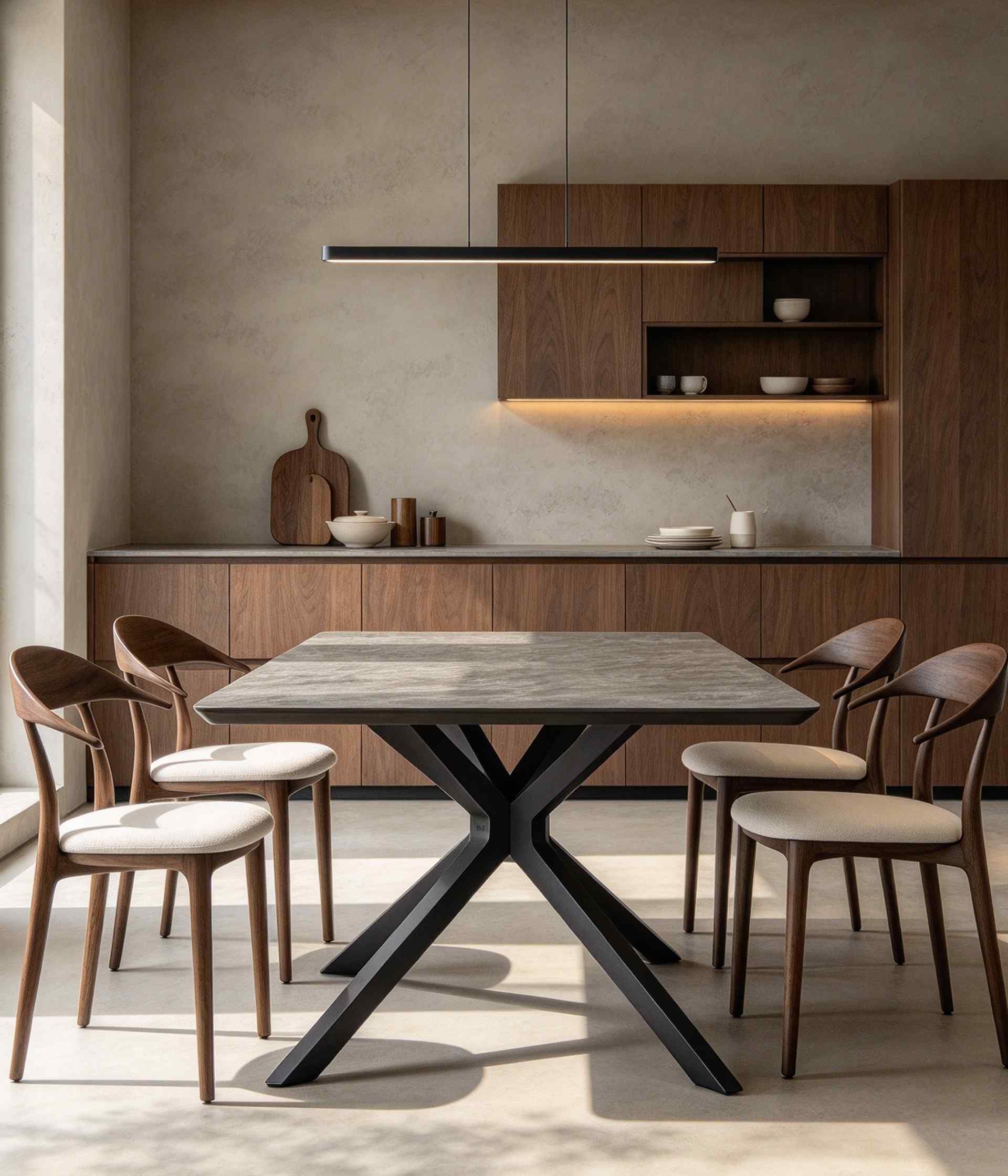
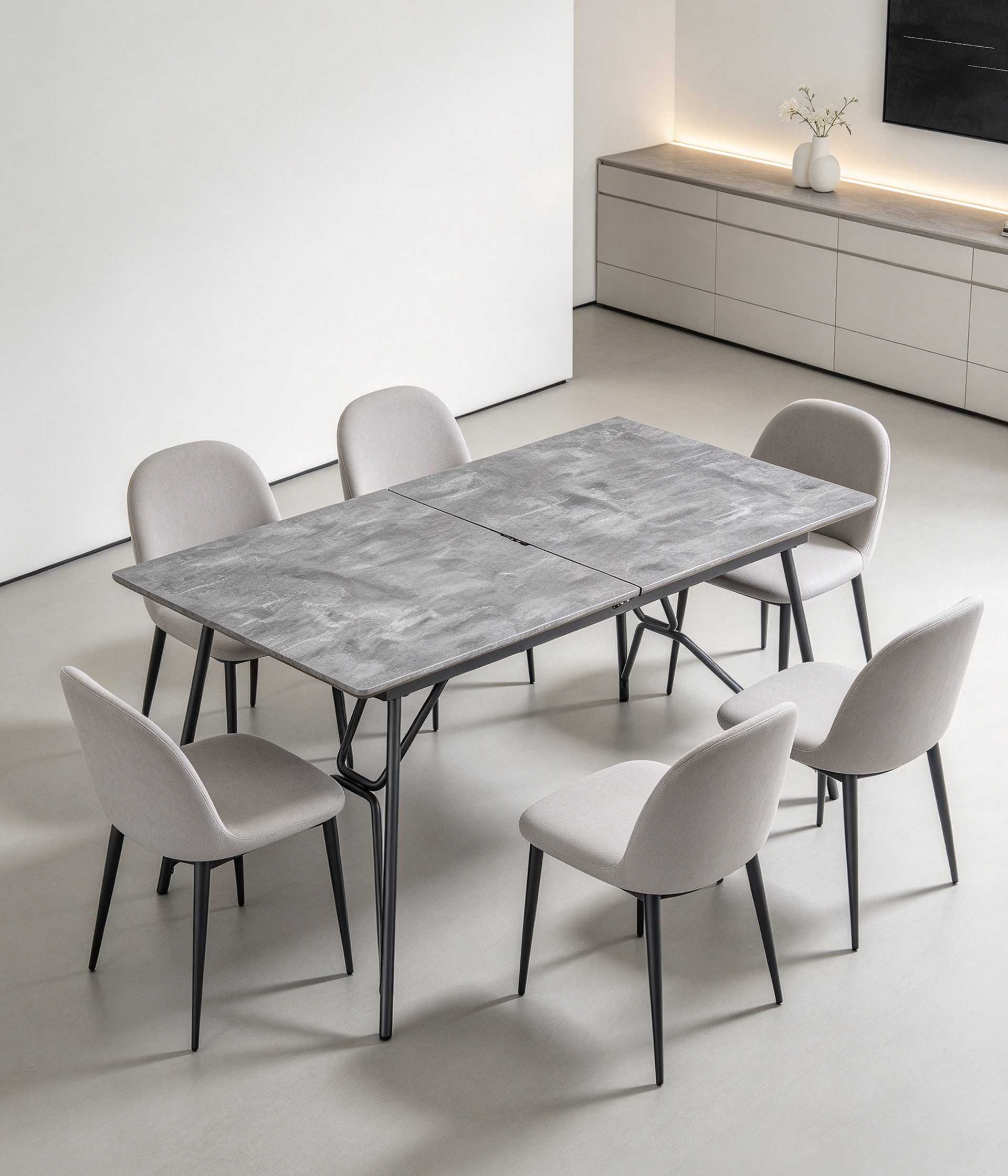
A concrete-look table uses another material as its core and reproduces the appearance of concrete through a surface treatment. The Basel 5015045 ausdehnbarer Esstisch uses an MDF veneer tabletop with a grey concrete-style finish and a black metal frame. Its design also expands for additional seating. The appearance is concrete-inspired; the product listing does not identify the tabletop as a cast concrete slab. That distinction matters when describing it accurately to customers.
A Cement-Based Tabletop
The real concrete table top consists of the cement product that may also contain some aggregates and reinforcement. The manufacture process of the table top includes casting, polishing, pigmenting and sealing. Different mixes and different thicknesses of the concrete may have different properties, so the concrete itself cannot ensure the certain weight, resistance to staining and structural properties.
Which Dining Table Is Heavier and More Difficult to Deliver?
Weight does not only affect the ability to lift. It may influence packaging, installation, the base support, and the usefulness of the table when rearranging the room.
Tabletop Weight and Installation
A real concrete slab of similar size will generally weigh more than an MDF-based concrete effect top. Nevertheless, there is no definite weight difference since even a light concrete slab, a heavy MDF board, and a heavy metal base might be used to alter the final weight. Ask for the net and gross weights of the particular product. In the case of upstairs apartments, small staircases, and home deliveries, it is advisable to inquire about the carton sizes.
Transport Risk and Assembly
Hard surfaces may damage the concrete edges if the concrete edges come in contact with hard surfaces during transportation. Concrete look MDF table requires protection against any damage to the veneer and edges from impact. Neither of these two options should be transported with any loose metal parts touching the table top. For bulk purchasers, it is important to look into corner protection, movement inside boxes, assembly guide, and hardware used to attach the table top with its structure.
Which Surface Is Easier to Clean After Everyday Meals?
The need for cleaning depends on the finished appearance, not simply whether the material is grey and textured. Both may stain if the incorrect cleaner is used.
Cleaning a Concrete-Look MDF Finish
If it is an MDF table, please follow the directions for its actual surface. There are many decorative surfaces that can be wiped using a soft, wet cloth, but they vary in terms of resistance to heat, solvents, and standing water. Any spill should be wiped immediately, especially those located close to seams and edges from where water can get to the underlying board.
Sealers, Stains, and Real Concrete
Concrete is not stainproof. It will absorb oils or colored liquids if it is improperly treated or sealed, and sometimes sealing agents leave dull spots or rings when they come into contact with wrong substances. Different cleaning procedures are to be applied to different mixes and specific sealers for this mix recommended by its producer. The questions to ask include the list of cleaners that can be used, resealing possibilities, and identification of coating damages.
Which Dining Table Stands Up Better to Scratches and Daily Wear?
Durability is a blend of coating, edge build, frame stiffness, and practical use. The naming of an object that sounds hard does not equate to proof from a tested sample.
Wear on Concrete-Effect Surfaces
If the table uses an MDF board with a decorative finish that is prone to revealing another material underneath the surface, then finish adhesion and edge protection become vital. Consumers should be aware of changes in color after wiping, the presence of scratch marks from regular dining utensils, and the vulnerability of any joints in the expansion table. The table can be checked when open and closed, as the edges will be visible while in use.
Wear on Genuine Concrete Surfaces
A concrete tabletop may be strong, but its corners could chip and its finish may become scratched or discolored. Hairline patterns, texture, and sealer deterioration need individual consideration and should not be assumed to be the same problem. Ask for close-up pictures and, if possible, a sample to examine. Compare the scratches, water stains, edge damage, and reaction to cleaning to the finish standard described by the manufacturer.
Which Option Fits Different Homes and Wholesale Collections?
The best way to do it is dependent on who will be using the table and what they are willing to compromise on. Style and performance are different but style can still be shared.
Everyday Rooms and Flexible Layouts
The concrete look dining table constructed using MDF material may be appropriate for households that prefer the industrial feel but do not want a real concrete table. This type of design by Basel is useful for those homes that experience fluctuations in the number of visitors. Consumers are advised to find out the measurements when extended. Other options in the Esstisch Kollektion may suit rooms where extensions or metal bases are not required.
Retail Ranges and Accurate Product Claims
It is vital for retailers to separate ‘concrete effect’ from ‘concrete’ while describing their products, filtering materials, packaging and instructions for customers. Incorrect information about materials may give the buyer an impression that cannot be fulfilled by the decorative MDF surface. It is important to compare prices, stock availability, weights and instructions for the same model. Forest Furniture’s related dining table material comparison provides additional context for choosing between engineered wood and other tabletop constructions.
Why Consider Forest Furniture for Concrete-Look Dining Tables?
Waldmöbel is a furniture manufacturing and export supplier based in Tianjin, with a range spanning dining tables, seating, upholstered furniture, and panel furniture. Basel provides a concrete-style MDF option within its dining table selection. The product information provided by the company can be used by retailers and wholesale customers to initiate conversations on finishes, packaging, samples, and market requirements, ensuring that the right specifications of the selected model are confirmed before making an order
Schlussfolgerung
Both a concrete-look and an actual concrete table cannot be assessed purely on the basis of appearance. Whereas a concrete-effect medium density fiberboard top can give a lighter construction alternative in some circumstances, the actual concrete top offers its own material quality and maintenance routine. An informed comparison would be based on established materials, actual weight, edge protection, cleaning procedure, and sample performance. Informed choices can thus be made by consumers and furniture dealers from among those options.
Häufig gestellte Fragen
Is a Concrete-Look Dining Table Made from Cement?
That is not always true. Concrete look refers to appearance. For instance, the Basel 5015045 model employs concrete-looking finish to its MDF top.
Are Real Concrete Dining Tables Always Heavier?
Although a large concrete slab is usually heavier compared to an MDF surface, the factors like the thickness and construction of the frame play a role too.
Can Both Types of Dining Table Develop Water Rings?
Of course, depending on the surface treatment and purpose. MDF table surface treatments can become scratched, as well as concrete sealants. Please follow the respective maintenance guidelines.
