

How Should Buyers Inspect Woven Dining Chair Seats? Tension, Sagging, Edge Finish, and Frame Joint Checks
A woven dining chair can look consistent in a showroom image while still carrying production risks at the seat edge, attachment points, or frame joints. For importers and furniture retailers, a useful inspection therefore goes beyond judging the weave pattern. It checks whether the seat is evenly supported, whether the visible finish matches the approved sample, and whether the chair remains stable after assembly. The Neo 9024019 woven dining chair provides a practical reference: it combines a woven seat with a solid rubber wood frame and semi-knockdown packing. The following buyer checks can be adapted to the agreed material specification, sample and intended market.
Why Does a Woven Seat Need Its Own Inspection Plan?
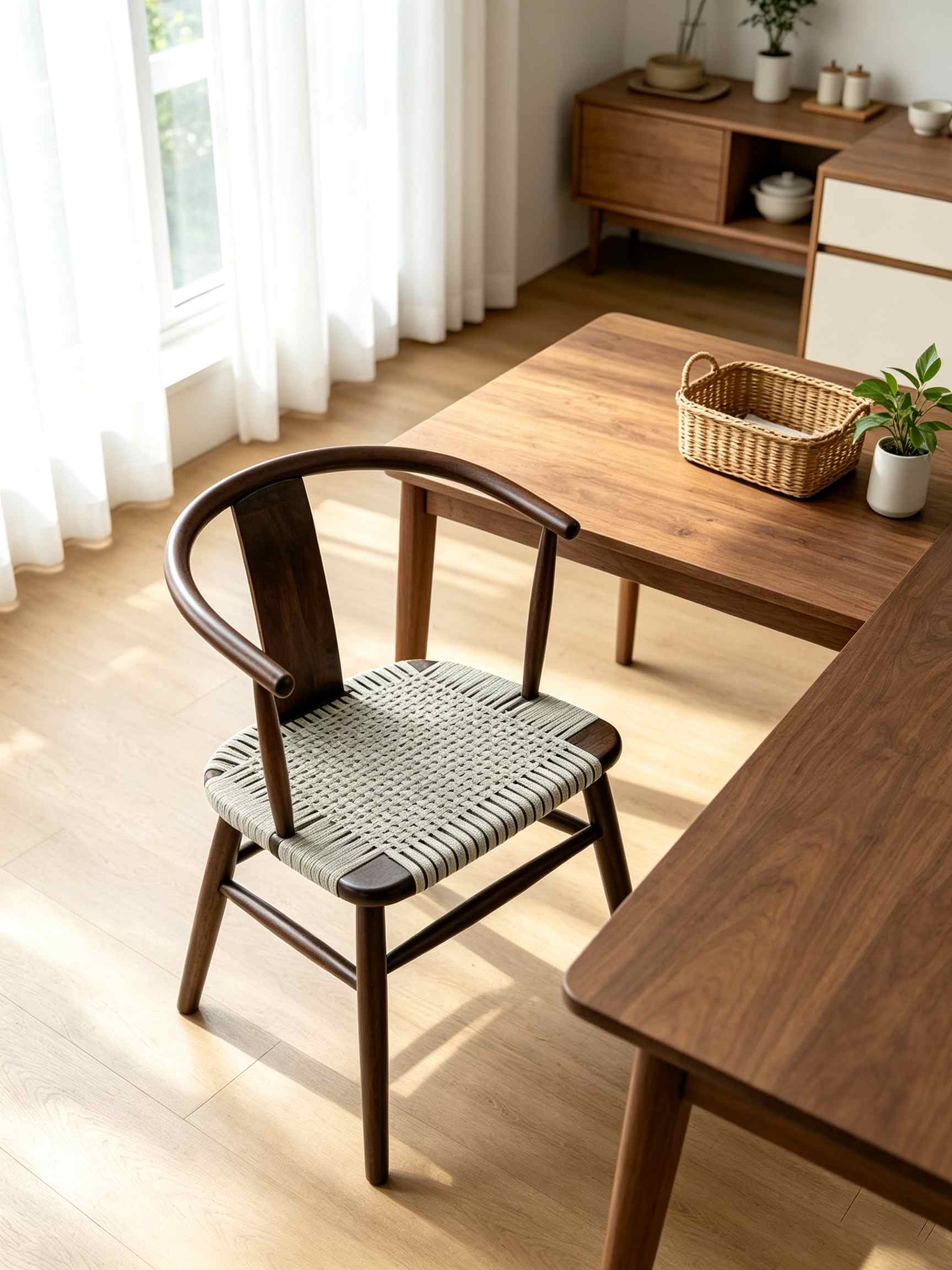
A woven seat behaves as a connected surface. Local looseness can redistribute tension, and an attachment problem near the rail may be less obvious than a flaw at the center. Buyers should therefore assess the complete seat, including the central field, perimeter, underside and interface with the wooden frame. This approach separates natural visual variation from workmanship that could affect appearance, comfort or consistency across a shipment.
The inspection standard should identify the approved chair, color, weave appearance and packing configuration. Because the Neo page describes the seat simply as woven, buyers should not assume a specific fiber from photographs. The purchase specification and approved physical sample should define the actual material, construction and acceptable variation before mass production begins.
What Should Buyers Approve Before Mass Production?
The strongest inspection starts before the first production batch. A signed sample gives the factory and buyer a common visual and dimensional reference, while a written checklist makes the decision criteria repeatable. The review should cover both the woven panel and the solid wood structure rather than treating them as separate products.
Record the Woven Seat Standard
Photograph the approved seat from above, below and at each edge. Record the intended pattern direction, spacing, edge treatment, attachment method and acceptable hand-work variation. If the weave is expected to feel firm or flexible, describe that expectation through an agreed sample instead of using vague words such as tight or comfortable. A limit sample can also show the boundary between acceptable variation and a visible defect.
Lock the Frame and Finish Reference
Confirm the rubber wood frame, color option and surface appearance on the finished chair. Neo is offered in natural, walnut, dark brown and black, so the approved reference should identify one exact selection for the order. Record the sheen and visible grain expectation as well. Color names alone are not enough because lighting, wood absorption and coating application can change how the final chair appears.
How Should the Woven Surface Be Checked?
Inspectors need a consistent sequence that can be repeated across randomly selected units. Begin with a visual comparison under stable lighting, continue with careful touch and support checks, and finish by reviewing the underside. The goal is to detect repeatable production drift without inventing an unapproved load test or damaging the sample.
|
Inspection area |
What to compare |
Potential concern |
|
Center field |
Pattern, spacing and overall level |
Loose zones, distortion or visible sag |
|
Working edge |
Tension and transition into the frame |
Gaps, uneven pull or lifted sections |
|
Attachment |
Position and consistency on every side |
Detachment, exposed fastening or movement |
|
Underside |
Finish, strand ends and seat support |
Rough ends, incomplete securing or obstruction |
Compare several chairs together rather than allowing the best unit to represent the lot. Sampling across cartons and production times makes it easier to see changes in pattern, seat level or finish. Buyers sourcing several seating styles can also review the verified dining chairs category to align inspection language across related models while keeping the acceptance criteria specific to Neo.
How Can Frame Joints and Chair Stability Be Verified?
Seat quality cannot compensate for an unstable frame. Place the assembled chair on a known flat inspection surface and check that all legs make consistent contact. Apply only the agreed functional checks, listening for movement or noise and watching the junctions between legs, rails and back components. A problem that repeats across multiple units may indicate assembly, machining or hardware variation rather than an isolated floor issue.
For a semi-knockdown chair, inspection should include the assembly experience. Confirm that the supplied hardware matches the packing list, holes align without forcing, and the instructions lead to the intended final geometry. Recheck the chair after assembly because uneven tightening or incorrect hardware can create rocking even when individual components appear acceptable.
What Finish and Edge Details Often Cause Claims?
Hands and clothing repeatedly contact the seat perimeter, backrest and rail edges. Inspect these areas for rough fibers, sharp transitions, coating build-up, bare spots, scratches and visible repair marks. The woven surface should not be trapped against an unfinished or abrasive edge that could cause premature wear. On dark finishes, dust, rub marks and inconsistent sheen may also become easier to see when several chairs are placed together.
The inspection record should connect each defect to a location and unit number. Clear photos taken under the same lighting are more useful than general comments such as poor finish. Forest Furniture’s existing guide on what commercial buyers should check before ordering solid wood dining chairs provides wider context on dimensions, materials, finishes and packing; a Neo-specific checklist should go further on the woven seat itself.
How Should Buyers Sample and Document the Shipment?
Agree on the inspection stage, sampling method and response to major or repeated issues before production. During inspection, identify every checked carton and chair, then record seat appearance, attachment, frame stability, finish and assembly result in the same order. If a concern appears, expand the check according to the agreed quality plan rather than relying on one photograph or one chair.
Packaging also matters because pressure or abrasion in transit can change the delivered condition. Verify that woven seats are protected from hardware, frame edges and carton compression, while allowing the packing design to follow the supplier’s approved configuration. Neo’s listed packing type is semi-knockdown, so the final packed sample should be reviewed as a complete system, not only as separated parts.

Why Work with Forest Furniture for Woven Dining Chairs?
Waldmöbel is a furniture manufacturing and export company serving retailers, wholesalers, online sellers and organizations supplying hotels and short-term rentals. Its range includes solid wood and upholstered furniture, including dining chairs. For a woven chair order, buyers can use the Neo product specification as the starting point and confirm materials, finish, packaging and inspection expectations with the supplier before production.
Schlussfolgerung
A reliable woven dining chair inspection follows the entire load path from the seat center to its edge, attachment and wooden frame. Buyers should approve a physical standard, inspect multiple units under consistent conditions, verify assembly and stability, and document defects by location. This process helps distinguish acceptable hand-work variation from repeated issues that could create mismatched sets, returns or avoidable rework.
Häufig gestellte Fragen
What is the first area to inspect on a woven dining chair?
Start with the whole seat rather than one spot. Compare the center, perimeter, attachment points and underside with the approved sample, then check how the seat connects to the frame.
Can photographs confirm that a woven seat is strong enough?
Photographs can show pattern, visible sagging, broken areas and attachment details, but they cannot prove material identity or structural performance. Use the agreed specification, physical sample and appropriate product tests.
Should a semi-knockdown chair be inspected after assembly?
Yes. Assembly can reveal hardware, hole-alignment and tightening problems that are not visible in separate components. Check the final chair on a verified flat surface after following the supplied instructions.
