

OEM Coffee Table Customization Guide: Colors, Materials, Packaging and Private Label Without Losing Margin
OEM customization allows furniture brands, wholesalers, and retailers to create Kaffeetische for a specific market position. However, every added finish, material, carton, and label can increase complexity and reduce profit. A successful program connects design decisions with landed cost, production consistency, and shipping efficiency. The goal is not to offer the most options, but to select the options customers value and suppliers can reproduce efficiently.
How Can Buyers Protect Margin Before Customizing a Coffee Table?
Margin control should begin before sampling. Buyers need a commercial framework that guides design, material, packaging, and branding decisions.
Set a Target Landed Cost
Start with the expected selling price, then deduct marketplace fees, duties, inland transport, warehousing, promotions, and the required gross margin. The remaining amount becomes the target landed cost. Sharing this target with the supplier helps compare structures and materials before sampling.
Freeze the Core Specification
Create one specification sheet covering dimensions, construction, materials, finish, hardware, assembly, packaging, labels, tolerances, and inspection criteria. Quotations, samples, purchase orders, inspections, and repeat orders should follow this approved document.
How Should Colors Be Customized Without Creating Too Many SKUs?
Color quickly differentiates a coffee table collection. It can also divide order volume across too many variants, making purchasing and stock management less efficient.
Build a Focused Color Palette
Choose two or three commercial finishes that fit the target market, such as light oak, walnut, cream, black, or white. Add seasonal colors only when forecast demand justifies another SKU. Using the same finish across related tables can also support a coordinated collection.
Approve Physical Finish Samples
Digital images cannot fully show sheen, grain direction, texture, or undertone. Approve a physical panel and record the color reference, gloss level, surface texture, and acceptable variation. Keep a signed master sample for production and repeat-order checks.
Which Coffee Table Materials Offer the Best Cost-to-Value Balance?
The best material depends on target price, sales channel, durability, and shipping conditions. Buyers should select visible materials that support the intended retail position without creating unnecessary costs.
Match Visible Materials to the Market Position
MDF suits smooth shapes, painted surfaces, and consistent dimensions. Veneer can provide a natural wood appearance while controlling cost. Tempered glass creates a lighter visual effect, while sintered stone can support a premium position but may increase weight and packing requirements. Solid wood offers natural character, although grain and color variation should be included in the approval criteria.
Standardize Hidden Components
Different designs can often share internal frames, fittings, fasteners, or assembly methods. Common components simplify purchasing, production, spare parts, and after-sales support. Before mass production, buyers should also check stability, edge durability, cleaning resistance, load performance, and assembly time.
How Can Packaging Reduce Damage Without Increasing Freight Costs?
Packaging is part of product design rather than a final purchasing detail. Weak protection can cause damage and returns, while oversized cartons can reduce container efficiency.
Design Packaging for the Sales Channel
Retail distribution may use standard export cartons, while e-commerce orders often require stronger corner protection and better internal fixation. Knockdown or semi-knockdown construction can reduce carton volume, but assembly must remain simple. Hardware should be securely packed, with clear instructions.
Review Protection and Loading Together
Ask for carton dimensions, gross weight, packing structure, and estimated loading quantity before approval. Packaging checks may include drop, vibration, compression, and trial assembly. Reducing unused space can improve freight efficiency.
How Should Private-Label Details Be Added Efficiently?
Private labeling should make the product recognizable without adding unnecessary production steps. The most useful elements support branding, operations, assembly, or customer service.
Choose High-Impact Brand Touchpoints
Depending on supplier capability, buyers may request product labels, carton marks, barcode labels, assembly instructions, hang tags, warranty cards, or branded inserts. Select only the elements customers or distribution teams will use.
Approve Artwork Before Production
Provide vector logos, color references, barcode data, legal wording, carton marks, and language versions early. Use an approval sheet showing placement, dimensions, printing method, and the final artwork version. Late changes can cause reprinting, repacking, delays, and added cost.
Why Consider Tianjin Forest Technology Co., Ltd. as a Coffee Table Supplier?
An OEM supplier should connect product selection, export coordination, and customization requirements. Tianjin Forest Technology Co., Ltd. describes itself as a Möbel manufacturing and export company serving retailers, wholesalers, online sellers, and organizations supplying hotels and short-term rentals. Its broader furniture range includes solid wood, upholstered, panel, MDF, tempered-glass, and sintered-stone products.
What Published Options Can Support OEM Buyers?
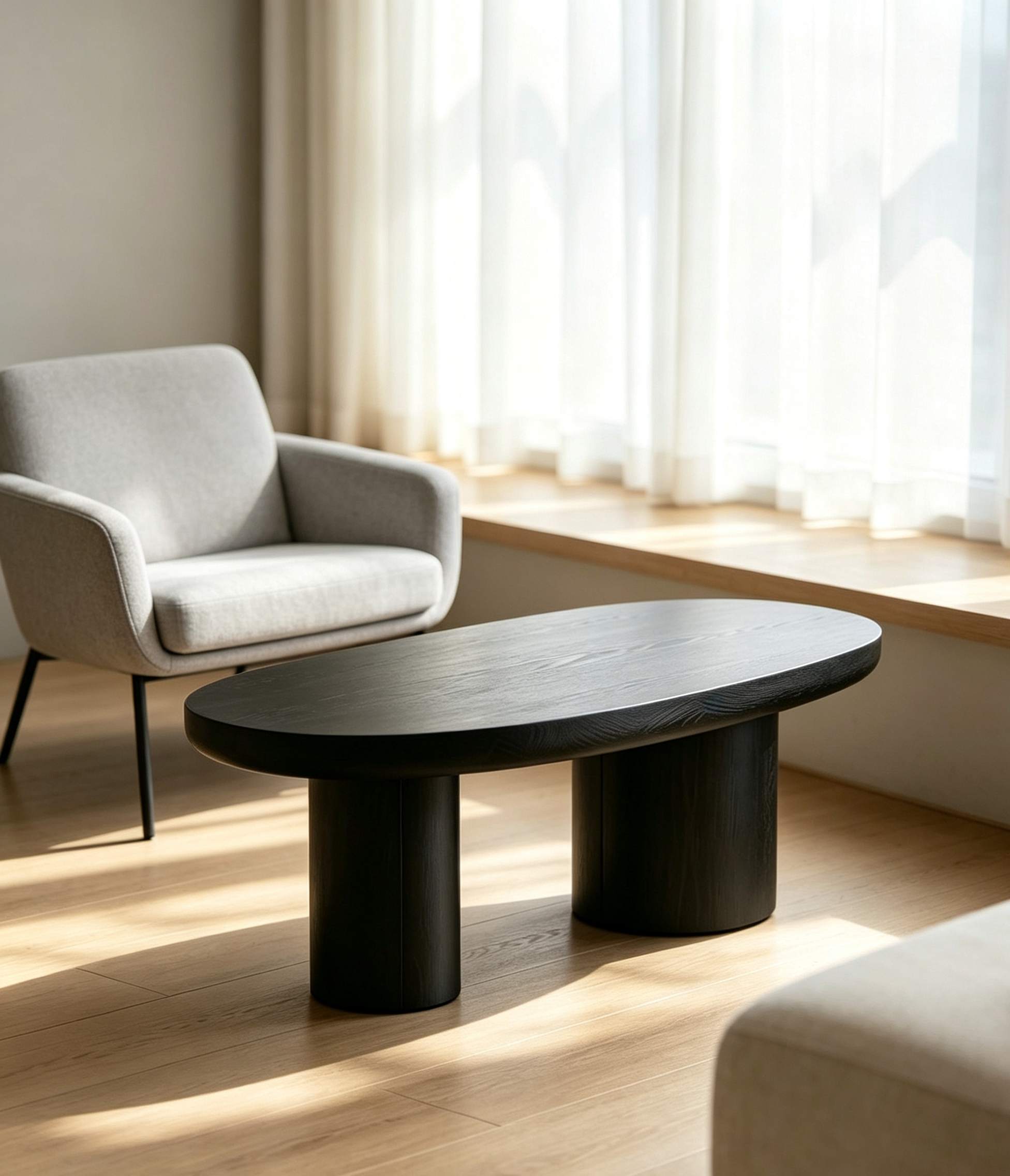
The company’s coffee table category displays several models, including a cloud-shaped MDF design. For that referenced model, the product page lists MDF construction, an MDF and veneer top, semi-knockdown packing, and customization of color, material, and packaging. It also mentions custom hang tags and mail-order packaging for online sales platforms. Buyers should confirm the final specification, MOQ, testing requirements, and lead time for each model.
Schlussfolgerung
Profitable OEM customization depends on disciplined choices. Buyers should set a target landed cost, limit the color palette, select materials for the intended market, engineer packaging alongside the product, and approve private-label artwork before production. Standardizing components and freezing specifications early can reduce errors.
Buyers planning a custom collection can contact Tianjin Forest Technology Co., Ltd. to discuss available models, finishes, packaging, MOQ, and production schedules.
Häufig gestellte Fragen
What Is the MOQ for a Custom Coffee Table?
MOQ varies by model, material, finish, packaging, and customization level. The referenced cloud-shaped coffee table has a listed MOQ of 300 pieces, but this is not necessarily the standard for every product. Buyers should request a model-specific quotation.
How Long Does OEM Coffee Table Production Take?
The referenced cloud-shaped model lists a production lead time of 30–45 days. Actual timing may vary with quantity, materials, finishes, packaging, testing, artwork approval, and capacity. The final schedule should be confirmed in the purchase order.
Which Customization Details Should Be Approved First?
Approve the product structure and materials first, followed by color, packaging, labels, and private-label artwork. Packaging dimensions depend on the final construction, while carton marks and labels depend on the confirmed package. This sequence reduces repeated sampling, artwork revisions, and avoidable rework.
