

ROI Thinking in Commercial Furniture Initial Cost vs Long-Term Value
Professionals in the furniture trade recognize the constant balancing act faced by business operators in hospitality and office fields. Immediate expenditures draw attention with apparent economies, yet genuine worth unfolds through extended service periods. ROI thinking in commercial furniture: initial cost vs long-term value shapes these evaluations, contrasting prompt outlays with robustness and diminished renewals. Within environments subject to intensive occupancy, such as eateries or reception halls, selection of resilient components substantially trims recurring charges. This methodology gains relevance amid escalating raw material fees and imperatives for ecological accountability, advocating for judicious acquisitions.
Understanding User Needs: Why Focus on ROI in Commercial Furniture?
Those responsible for acquisitions and space management pursue strategies to maximize financial resources while upholding standards. Envision a lively bistro where seating endures relentless strain from rotating clientele—inexpensive selections may appear advantageous initially, but recurrent repairs swiftly diminish earnings. Here, computations of return on investment prove essential, enabling identification of superior choices in business contexts.
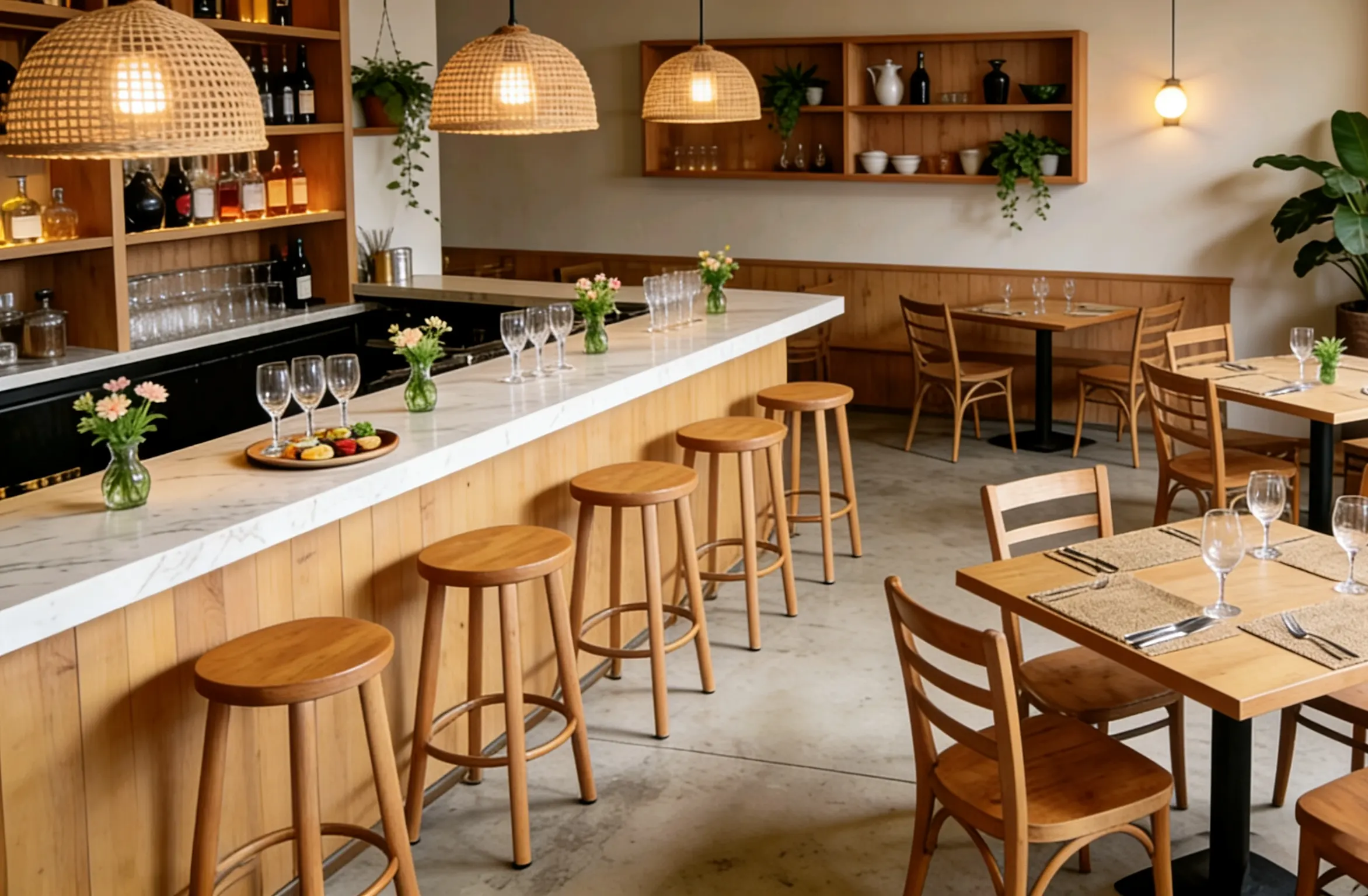
Inquiries regarding commercial furniture ROI frequently arise from challenges like elevated substitution frequencies in primary zones. Seating elements like chairs and benches encounter the greatest degradation in meal areas or holding spaces, prompting examinations of chair bench ROI in high-traffic areas. Stakeholders seek evidence demonstrating benefits from superior constructions, including frameworks that persist for ten years rather than succumbing after brief intervals. Comparable attention surrounds long-term value in sofas for public areas, particularly within lodging facilities where coverings confront liquid exposures and substantial seating loads repeatedly.
Financial aspects aside, ecological viability constitutes a significant motivator. Purchasers attuned to conservation prioritize elements derived from regulated woodlands, mitigating environmental burdens alongside elevating corporate reputation. Evaluators additionally incorporate occupant ease—designs promoting proper posture lessen absences due to unease, contributing secondary economies. Explorations such as ROI of commercial chairs and benches disclose purposes for origin scrutiny, including reasons for premature failures in economical variants, and remedies for superior alternatives. Addressing these elements assists enterprises in synchronizing procurements with practical exigencies, ranging from nascent ventures to extensive renovations.
Sector metrics reinforce this emphasis. Analyses reveal that superior furnishings can diminish aggregate possession expenses by 30 to 50 percent across five-year spans, primarily via scarcer exchanges and reduced preservation. Within administrative surroundings, steadfast seating fosters efficiency, circumventing concealed outlays from inadequate support. For dining establishments, sturdy benches facilitate uninterrupted functions absent perpetual interruptions. Grasping these requisites aids in transitioning from impulsive procurements to calculated commitments yielding sustained yields.
Comprehensive Comparison: Initial Cost vs Long-Term Value in Key Categories
Delving into particulars, disparities between economical and superior alternatives manifest most evidently in segments vulnerable to rigorous utilization. Chairs and benches lead in renewal incidence, with sofas in shared domains trailing closely. A parallel assessment discloses how preliminary disbursements align against persistent advantages.
Examine chairs initially. Economical variants may price at $50 to $100 each, typically incorporating slender supports and rudimentary textiles that deteriorate in active locales. Superior editions, constructed from dense rubberwood or oak with strengthened connections, range from $200 to $400. The compensation materializes in endurance—economical chairs could sustain for two to three years in a dining venue, whereas more robust counterparts persist eight to ten. Account for upkeep: inferior coverings absorb marks readily, necessitating regular sanitation or recovering, while advanced leathers or processed cloths repel incidents more effectively, curtailing workforce expenditures by 20 percent yearly.
Benches exhibit analogous trends. In bustling entryways, basic benches at $150 to $250 employ composite cores that yield under pressure. Enhanced models with firm timber foundations and cushioned surfaces, valued at $400 to $600, preserve form considerably longer. Information from maintenance logs indicates superior benches halve renewal requirements, extending a five-year period to ten. This holds importance in administrative zones where benches function as collaborative seating, bolstering group interactions sans ongoing adjustments.
Sofas in communal sectors magnify these variances. Inferior sofas, approximately $300 to $500, commonly integrate fragile coils and sparse paddings that flatten promptly. Elevated models at $800 to $1,500 feature timber skeletons, dense foams, and resilient textiles such as boucle or cotton-linen mixtures. In lodging foyers, where sofas accommodate numerous occupations weekly, lesser versions may demand recovering every 18 months. Superior ones, incorporating sectional arrangements for straightforward component exchanges, prolong utility to seven years or beyond, generating 150 percent ROI across five years via curtailed inactivity.
For illustration, consider a moderate collaborative workspace equipping 20 positions. Choosing economical chairs entails renewing half biennially, appending $2,000 in charges plus assembly durations. Superior chairs, despite doubled preliminary pricing, evade that turnover, conserving $5,000 over ten years. Equivalent arithmetic pertains to sofas—wear in shared domains necessitates sturdy architectures, where preliminary economies on inferior skeletons result in tripled extended expenditures from foundational breakdowns.
Ecological perspectives introduce an additional dimension. Renewable timbers in superior components originate from overseen reserves, diminishing discards and conforming to conservation accreditations. Economical articles, frequently from ambiguous provenances, augment atmospheric impacts via recurrent disposals. Those investigating durable sofas for high-usage areas discover that preliminary commitments alleviate these effects, merging fiscal prudence with environmental stewardship.
|
Category |
Initial Cost (Budget vs Quality) |
Long-Term Value Factors |
ROI Calculation Example |
|
Chair-Bench |
$50-100 (Budget) vs $200-400 (Quality, e.g., rubberwood) |
High-traffic durability, scratch-resistant; 2-3 yrs vs 8-10 yrs lifespan |
Annual cost: $50/yr (frequent replace) vs $40/yr (longer life) |
|
Sofa-Ottoman |
$300-500 (Budget) vs $800-1500 (Quality, e.g., structured fabric) |
Fabric/structure longevity in public spaces; reduced cleaning (20% less maintenance) |
Total 5-yr ROI: 150% savings via fewer replacements |
This compilation highlights the transitions—superiority prevails through accumulated conservations. In operational terms, a dining network documented 40 percent diminished furniture allocations post-transition to sturdy benches, validating the computations in actual deployments.
From a Supplier’s Perspective: Maximizing ROI with Durable Commercial Pieces
Providers in the field observe the drawbacks of economizing directly. In business undertakings, patrons frequently commence with pricing labels but lament sparse substances when elements falter beneath routine pressures. Resilient configurations, such as those with firm timber skeletons and fortified coverings, reverse the narrative by furnishing worth that accumulates progressively.
Examine chairs in meal arrangements. Variants with rubberwood supports and posture-aligned rears, including those with broad foundations for steadiness, manage the demands of crowded sites. Providers observe that these surpass metallic substitutes susceptible to corrosion, particularly in moist atmospheres. An instance from a continental bistro chain demonstrated shifting to such chairs halved renewal frequencies, enhancing ROI as service cycles accelerated absent seating hindrances.
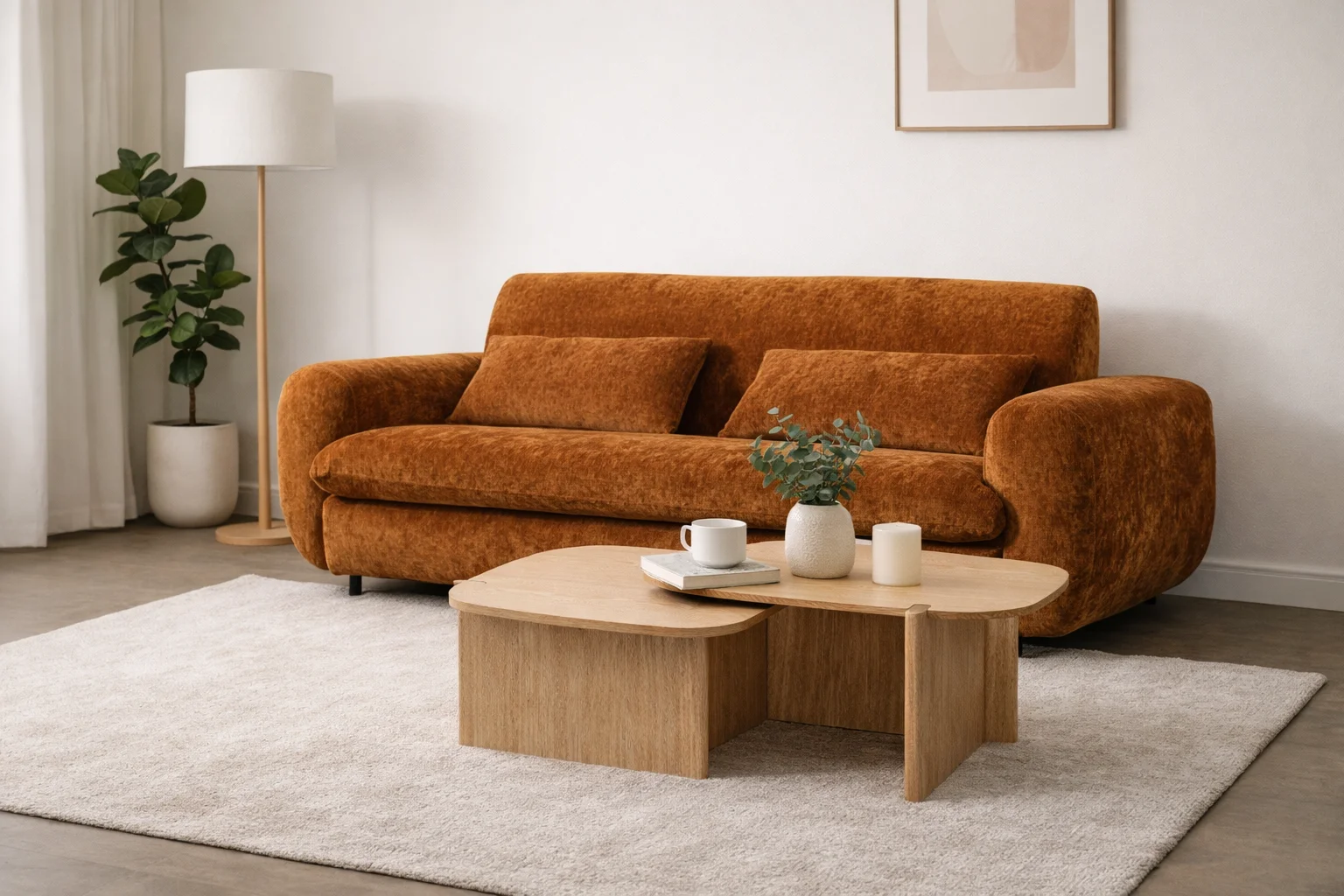
Sofas yield comparable observations. In shared lounges, organized textiles on timber frameworks defy drooping markedly superior to foam-exclusive constructions. Sectional choices permit targeted restorations—exchange a padding rather than the entire assembly—slashing charges substantially. A lodging consortium, following adoption of these, witnessed preservation decline 25 percent annually, crediting it to textiles that dismiss marks and skeletons that resist distortion.
Personalization heightens these advantages. Adapted conformations for designated areas, like benches with variable elevations for administrative uses, avert incongruities that precipitate premature degradation. Providers stress minimal order volumes for trials, permitting enterprises to expand sans excessive pledges. In regional markets where conveyance counts, collapsible formats reduce transit tariffs, augmenting comprehensive yields.
Viability integrates seamlessly. Components from accountable timber supplies not merely endure longer but also satisfy oversight barriers, evading penalties that diminish gains. Providers promote these, aware they curtail refuse contributions and attract conservation-oriented patrons. A regional merchant, for example, noted 35 percent revenue escalation from eco-designated sofas, overlaying promotional worth upon fiscal ROI.
In summary, providers recommend perceiving furniture as resources. Resilient commercial components, particularly in elevated-degradation segments, convert disbursements into commitments, with metrics indicating 200 to 300 percent yields across durations relative to discounts.
Actionable Solutions: How to Calculate and Implement ROI in Furniture Purchases
Determining ROI initiates with assembling foundational information. Monitor existing furniture durations—record the regularity of seating adjustments or substitutions in dining sectors. Employ straightforward equations: aggregate expense equates preliminary charge plus preservation and renewals partitioned by utility years. For a bench, if preliminary $300 with $100 annual preservation endures three years, yearly impact reaches $133. Contrast with a $600 superior edition requiring $50 upkeep over eight years, descending to $81 yearly.
Evaluate requisites comprehensively. In intensive occupancy zones, emphasize mark-resistant exteriors and firm linkages. For sofas, verify textile assessments for friction—target 50,000 revolutions or greater in shared locales. Instruments like tabulations assist in simulating situations: enter elements such as operational hours and restoration frequencies to predict conservations.
Choosing providers entails scrutinizing for standard indicators. Seek validations on substance origins and trial specimens under authentic circumstances—position a chair in the most active zone for 30 days. Minimal MOQ alternatives facilitate preliminary executions, lessening hazards. Upon selection, deploy progressively: introduce fresh components segmentally, instructing personnel on maintenance to prolong utility.
Mitigation recommendations thwart typical complications. Routine examinations detect slack fastenings promptly, preventing complete malfunctions. For coverings, administer shields against exposures, conceivably doubling textile durations. In administrative settings, posture evaluations avert degradation from improper application, linking into extensive health initiatives.
Evaluation determinations depend on circumstances. Emerging operations might incline toward economical for swift establishments but schedule enhancements as revenues advance. Mature entities prefer superiority for marque uniformity. A collaborative space manager, post numerical analysis, transitioned to sturdy benches and observed 28 percent expense reductions across four years. These measures transform theoretical ROI into tangible frameworks, directing acquisitions that bolster expansion.
About Forest Furniture
Forest Furniture operates as a prominent producer and shipper situated in Tianjin, China, with production sites spanning northern territories for streamlined fabrication. Having solidified a robust distribution network, the entity concentrates on dense timber and covered articles, encompassing chairs, benches, sofas, and tables adapted for business milieus. Catering to worldwide arenas from continental Europe to the Near East, it prioritizes excellence via varied substances like rubberwood and oak, coupled with personalization for lodging and merchandising. This methodology guarantees dependable, viable resolutions that fulfill diverse enterprise necessities.
Conclusion
Assessing preliminary expenses against extended worth in commercial furniture discloses superiority as the prudent route for majority functions. In segments such as chairs, benches, and sofas, resilient selections curtail renewals and preservation, furnishing substantial ROI. Enterprises embracing this perspective attain not merely economies but also improved utility and viability.
Frequently Asked Questions
What drives higher ROI for commercial chairs in busy settings?
Higher ROI for commercial chairs in busy settings arises from robust substances like rubberwood skeletons that endure routine degradation, diminishing renewals from biennial to eight years or beyond. This lessens charges by 30 to 50 percent progressively, as evidenced in dining chains where preliminary commitments in superiority produce scarcer interruptions and diminished preservation invoices.
How does initial cost vs long-term value play out for sofas in public areas?
Initial cost vs long-term value for sofas in public areas advantages superior constructions with dense foam and friction-resistant textiles, prolonging utility from 18 months to seven years. Economical choices precipitate regular recovering, escalating outlays, whereas elevated ones provide 150 percent yields via sectional restorations and mark defiance.
Why do benches show better long-term value in office environments?
Benches exhibit superior long-term value in office environments owing to dense timber cores that oppose yielding under collective utilization, halving renewal necessities relative to composite boards. This equates to yearly conservations of $10 to $20 per assembly, bolstering efficiency absent the concealed charges of recurrent exchanges.
What factors influence ROI calculations for upholstered furniture?
Factors influencing ROI calculations for upholstered furniture encompass textile endurance assessments, skeleton robustness, and utilization strength—elevated-occupancy components with 50,000 plus friction revolutions diminish preservation by 20 percent. Precise evaluations incorporate upkeep records and duration metrics for accurate conservation forecasts.
