

Best Base Designs for Sintered Stone Dining Tables
A sintered stone dining table blends a sleek stone look with a tough surface built for daily meals. Yet, the top is merely one piece of a great table. The base plays a huge role. It impacts stability and legroom. It also changes how many people can sit down. Furthermore, the base influences visual balance, setup, and delivery. You might see metal frames or artistic pedestal shapes. The ideal base design must hold the top firmly. At the same time, it needs to fit the table shape, dimensions, and target market.
Why Does the Base Matter for a Sintered Stone Dining Table?
A sintered stone top often acts as a bold visual center. Therefore, its support system needs to look balanced. It should never seem too flimsy or overly heavy. The base also has to spread the weight of the top evenly. This keeps the whole table steady during regular meals.
Many base styles perform nicely. However, each one offers a unique dining experience.
What Should Buyers Evaluate First?
Begin by looking at the tabletop size and shape. A long rectangular top generally requires support over a broad space. On the other hand, a round top frequently pairs well with a central pedestal.
Buyers need to review a few key details:
- Available legroom
- Number of dining chairs
- Distance between supports
- Floor contact points
- Assembly method
- Packaging dimensions
- Intended residential or commercial use
You must never judge the outer design without thinking about the inner support frame. Product developers and importers need to talk with the manufacturer. They should verify load capacity, steadiness, and setup steps before they order in bulk.
Are Metal Frame Bases the Most Versatile Choice?
Builders widely use metal frames for modern sintered stone dining tables. These frames offer a thin profile. As a result, the table avoids looking too heavy. They also match perfectly with black, gray, white, and marble-style tops.
Various metal layouts can create simple, industrial, or high-end styles.
When Do Four-Leg Metal Bases Work Best?
Four-leg bases provide a classic setup. They fit rectangular or square tables nicely. Straight legs give a neat look. Meanwhile, slanted legs bring a sense of motion and a fresh, modern vibe.
Shoppers easily recognize this layout. Still, you must pay close attention to where the legs go. Legs placed too near the corners might block people from sitting at the ends. Conversely, legs set too far inside can hurt stability. They might even make the top look awkward.
Forest’s Gisil dining table pairs a sintered stone top with metal tube legs. This model shows how a metal base holds up a modern rectangular shape. It also keeps a nice, open area under the tabletop.
When Is a Metal Sled Base a Better Option?
A sled base usually features two support frames. These attach directly to the top or an inner frame. This style builds great visual balance. It also delivers a firm stance on the floor.
This layout frequently fits medium and large rectangular tables. It makes putting chairs along the long edges much easier. That happens because no single legs block the seats. Even so, you must check the exact spot of each frame. You want to make sure people sitting at the ends enjoy plenty of room for their knees and feet.
Do Pedestal Bases Provide Better Legroom?
A pedestal base puts the main support near the middle of the table. This clears the outer edges of any corner legs. It makes arranging chairs much more flexible.
Of course, the shape and width of the pedestal still need to match the top properly.
Which Tables Suit a Single Pedestal?
A single central pedestal works wonderfully for round and smaller square dining tables. Guests can slide chairs around the rim without bumping into four distinct legs.
Makers build pedestal bases from metal, MDF, wood, or mixed materials. A round, tube-like pedestal offers a smooth, building-like charm. On the flip side, a slanted or grooved design brings extra fancy details.
For bigger tops, you must plan the support zone with care. A pedestal that is too thin might leave the table feeling wobbly. Meanwhile, a massive base will steal away valuable foot room.
When Should Buyers Choose a Double Pedestal?
A double-pedestal layout easily holds a longer rectangular or oval top. At the same time, it keeps the corners totally clear. It serves as a smart pick for tables meant to hold six to eight guests.
The two supports must sit far enough apart to bear the top well. But they should not sit so far out that they block the end chairs. Double pedestals also deliver a high-end look. This is especially true when they feature curved, lined, or angled finishes.
Can an MDF Base Create a More Sculptural Design?
MDF bases let factories build wide panels and curved shapes. They can also form grooved faces and structural designs. These shapes are often tough to make using basic metal tubes.
They fit perfectly into furniture lines that aim for a huge visual wow factor.
What Are the Benefits of a Solid-Form Base?
A solid-form base grants a sintered stone table a thick, matching look. Factories can finish it in black, natural wood styles, or stone patterns. They use other colors to match the top too.
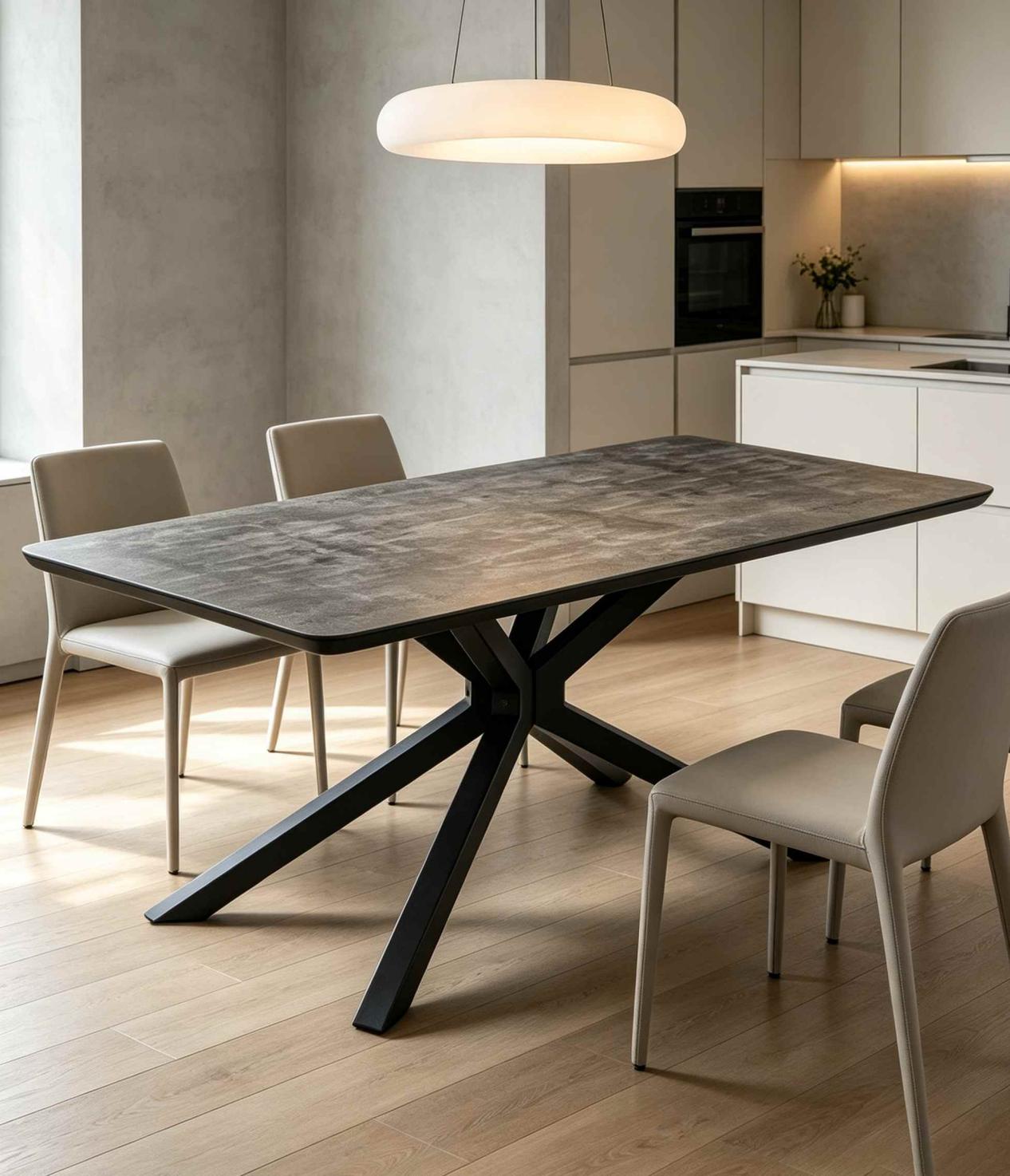
The Brin dining table from Forest features a sintered stone top paired with a tough MDF base. Its rectangular 180 × 90cm size shows how a wide base holds up a dark, modern dining table design. This model also comes with color, material, and packaging customization.
A solid MDF base might cover more floor space than an open metal frame. Because of this, buyers need to check the foot clearance. The packing layout matters greatly too. Big base parts can easily swell the carton size.
Are Crossed and Geometric Bases Good for Statement Tables?
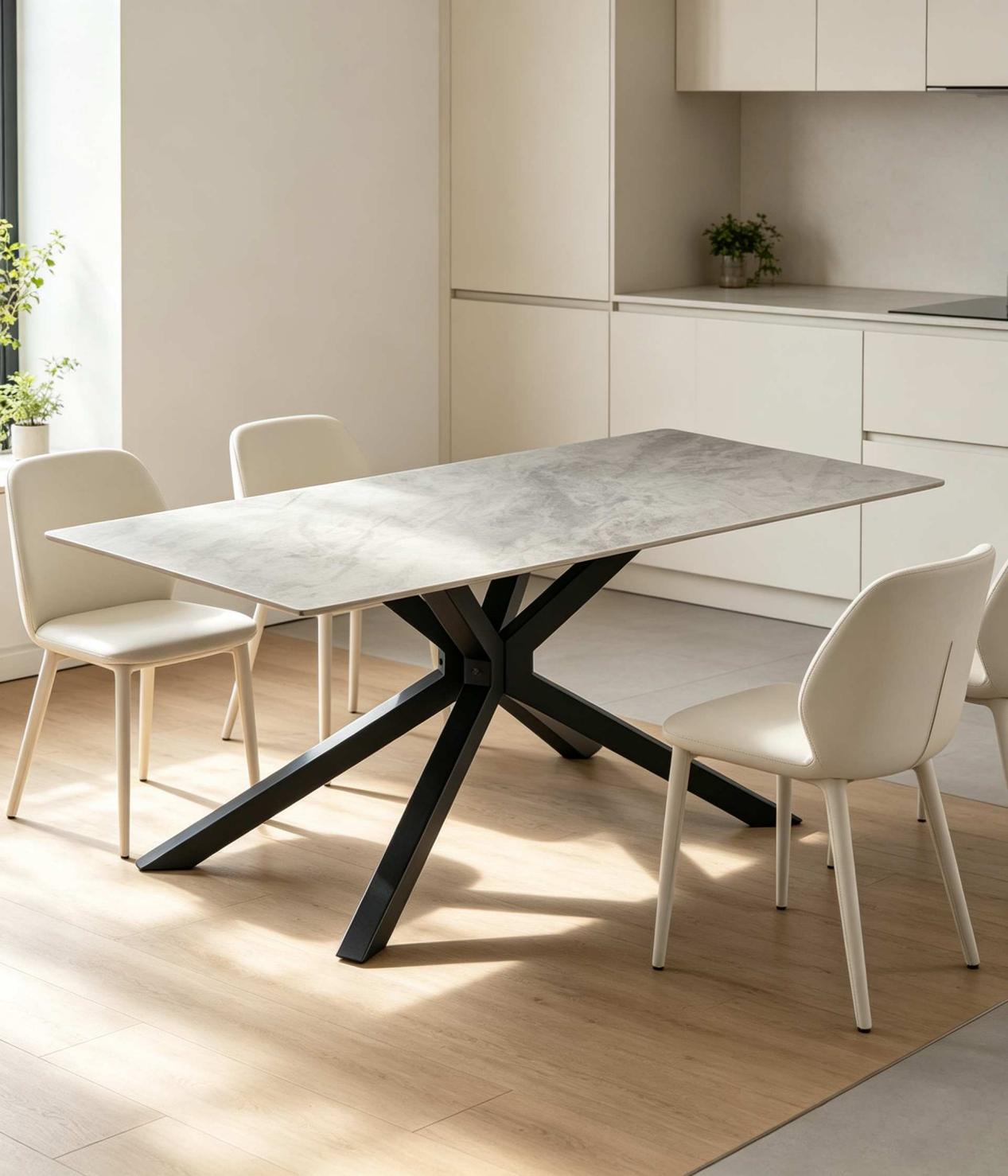
Crossed, X-shaped, star-shaped, and sharp-angled bases aim to grab the eye. They quickly turn a dining table into the main decor piece of any room.
These bold designs shine brightest when the base shape highlights the stone pattern. It should never fight against the top for attention.
What Should Buyers Check Before Selecting One?
First, see how far the base reaches under the chairs. A striking geometric shape might look stunning in product photos. However, it becomes annoying if guests constantly kick it with their feet.
Second, look at the number and spot of floor resting points. The base needs to stay steady on the target floor. It must not form useless hurdles around the eating area.
Lastly, think about the setup process. Tricky bases might need extra hardware and better manuals. They also demand tougher packing materials. For web sellers, an easy setup drops customer service complaints. It also cuts down on product returns.
Which Base Design Works Best for Different Table Shapes?
The tabletop border offers a handy starting point to pick a base. Pairing the support frame with the shape builds visual harmony. It also leads to cozier seating.
No single base works for every sintered stone dining table.
What Is the Best Match for Each Shape?
For rectangular tables, four-leg frames and sled bases act as smart picks. Double pedestals and panel-style MDF bases work nicely too. Long tops usually need support stretched across the whole length.
For round tables, a central pedestal is often the handiest route. It lets you place chairs smoothly around the rim.
For oval tables, double pedestals or curved center bases fit the gentle edges well. A base with soft, round touches builds a more unified look than a sharp, rigid frame.
For extendable tables, the base has to fit the sliding hardware. Buyers must see if the legs slide with the top or stay put. They also need to check if the base blocks seats when the table opens fully.
Why Choose Tianjin Forest Technology Co., Ltd. as a Dining Table Supplier?
A trusted dining table supplier must give you more than just a list of top patterns. It should aid in product growth and base customization. It must handle packing and bulk-order needs smoothly.
Forest partners with furniture brands across many global markets.
What Can Forest Offer B2B Customers?
Tianjin Forest Technology Co., Ltd. operates as a furniture maker and export firm. It holds factory resources all over northern China. Its lineup covers solid wood, soft fabric, and panel goods. It also makes MDF, tempered-glass, and sintered stone furniture. The business serves wholesalers, shop owners, and web furniture sellers. It works with hotels and short-term rental groups as well.
Its dining table line features sintered stone models built with MDF and metal bases. Forest also provides customization for colors, materials, and packing. This service helps distributors and furniture brands tweak items for distinct markets.
Conclusion
The finest base for a sintered stone dining table relies on the top shape and size. It also depends on the seating layout, style, and sales channel. Metal frames give a crisp, flexible look. Pedestal bases boost chair freedom, notably for round tables. MDF bases back up artistic designs. Meanwhile, crossed and angled frames deliver a massive visual punch.
B2B buyers should review steadiness, legroom, and setup steps. They must check packing and chair spots before picking a design. The winning table is never just the one with the wildest base. Instead, it is the one that mixes good looks, daily function, and solid build quality.
FAQs
Is a Metal or MDF Base Better for a Sintered Stone Table?
No single material wins by default. Metal bases usually offer a thinner, more open vibe. In contrast, MDF bases can form wider, highly artistic shapes. Your pick needs to lean on the design style and table size. It should also factor in the support frame, packing limits, and target price point.
What Is the Best Base for a Round Sintered Stone Dining Table?
A central pedestal acts as a highly useful choice. It keeps distinct legs away from the outer edge. This trait makes arranging chairs much easier. Naturally, the pedestal footprint and inner frame must still match the top diameter.
Can the Base Color Be Customized for Wholesale Orders?
Customization is often possible. It relies on the model, order volume, material, and factory limits. Forest offers color, material, and packaging customization for specific sintered stone dining tables. Buyers need to share their desired finish and reference photos. They should also state the order amount and target market when asking for a price quote.
