

Do Three-Leg Round Dining Tables Wobble? Stability, Floor Contact, and Buyer Checks
A three leg round dining table does not automatically wobble. Three floor contact points always form a plane, so a correctly built tripod base can sit firmly even when the floor has small variations. The real risks are different: a base with too little spread may tip under an off center load, loose joints can allow the top to twist, and poorly matched components can make the table feel unstable. Buyers should therefore assess the whole structure instead of treating leg count as a shortcut for quality.
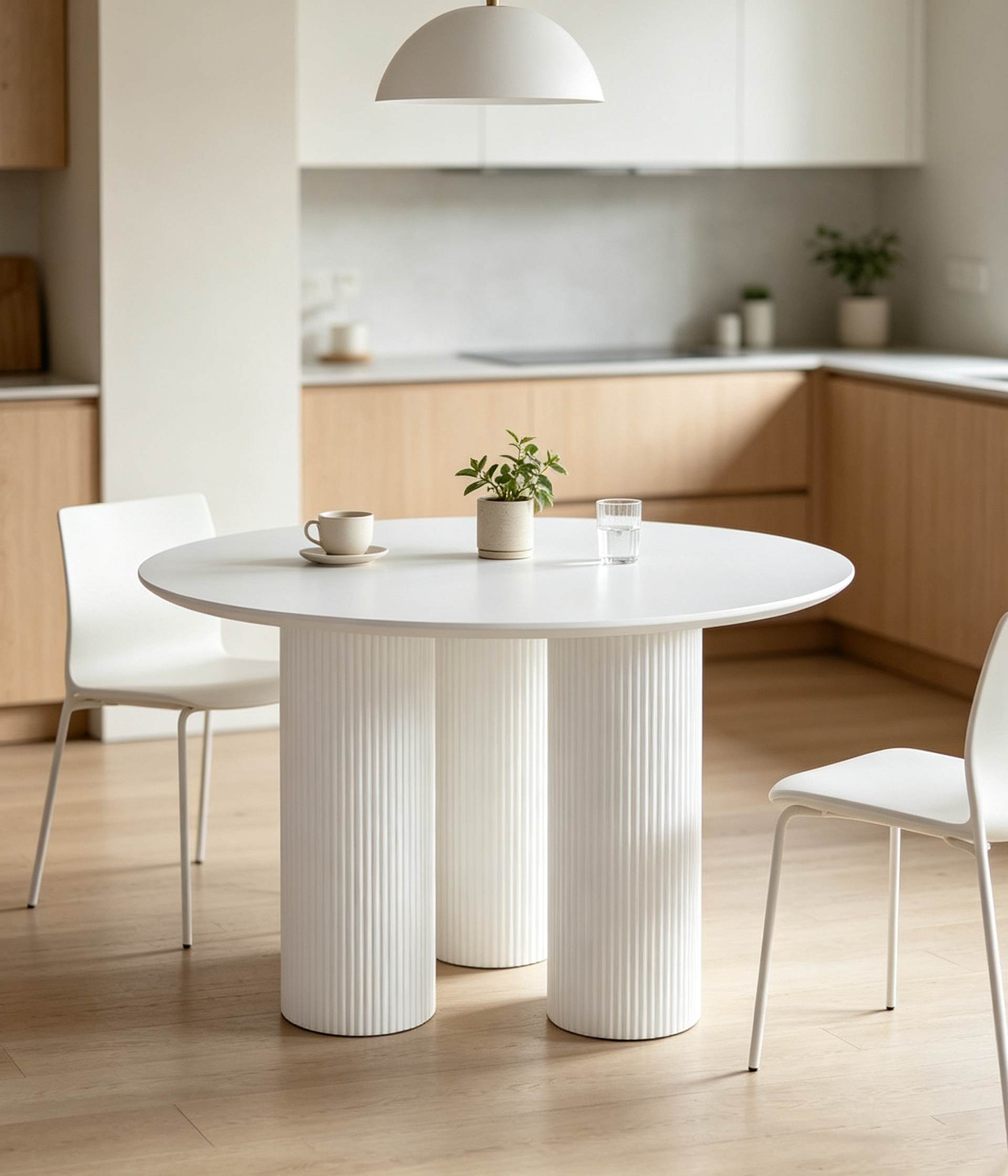
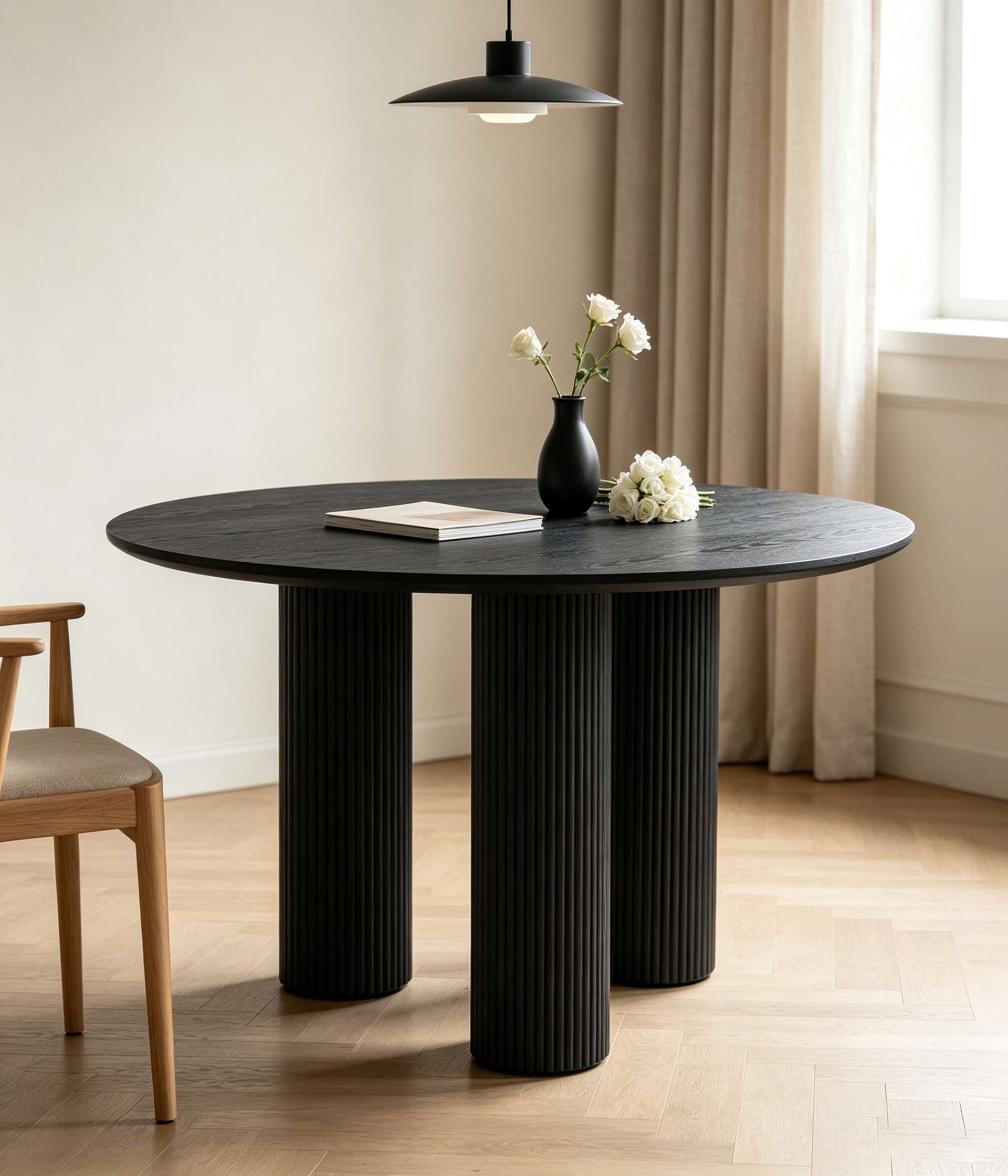
The Alton 5015001 round dining table uses a circular top with three cylindrical solid wood legs. Its design makes a useful case for examining how base geometry, connections, floor contact, and chair placement work together. The following checks apply to homeowners comparing a display sample and to professional buyers approving a bulk order.
Why Can Three Legs Sit Firmly on an Uneven Floor
A table with three contact points can rest on all three feet at the same time because those points define one plane. A four leg table may rock when one foot sits slightly above the floor unless the feet are adjustable or the frame flexes. This geometric advantage explains why tripods are common in equipment stands and compact furniture. It does not, however, prove that every three leg table is safe.
Floor contact is different from tipping resistance
Wobble and tipping are separate problems. Wobble describes repeated movement between contact points or within the frame. Tipping occurs when the combined center of mass moves beyond the support area created by the feet. A three leg base can avoid rocking yet still tip if the legs are clustered too close to the center or if a heavy load is placed near the tabletop edge.
The support triangle must match the tabletop
Look at the imaginary triangle joining the outermost floor contact points. A wider triangle generally provides better resistance to edge loading, although leg shape, total weight, joint strength, and tabletop diameter also matter. Buyers should not infer a safe load from a photograph. The approved product specification and physical sample must establish the intended performance.
What Should Buyers Check on a Physical Sample
A useful inspection combines touch, measurement, and repeated use. Perform the checks on the flooring for which the table is intended, then repeat any questionable result after confirming that the floor itself is reasonably level.
Check each foot and connection
Press near each leg without using excessive force. The table should not click, twist, or show visible movement where a leg meets the top or internal frame. Confirm that every fastener is present and correctly seated. On a production sample, compare the hardware and hole positions with the approved drawings so assembly workers cannot compensate for misalignment by forcing screws into place.
Apply controlled pressure around the edge
Place normal downward pressure at several points around the perimeter while another person watches the feet and joints. Stop if the table begins to lift or deform. The goal is to identify directional weakness, not to improvise a formal safety test. Importers that require certified performance should specify the relevant market standard and an agreed laboratory method before production.
How Does the Base Affect Seating and Legroom
The same base that supports the top also determines where chairs and feet can go. Buyers should evaluate stability together with seating access rather than approving each feature in isolation.
A well proportioned round dining table lets users approach the edge from several angles. Three legs can reduce visual clutter, but a chair may face a leg if the seating plan and base orientation conflict. Arrange the intended number and width of chairs around the actual sample. Confirm that knees, shins, and chair frames do not strike the supports during normal use.
Chair positions should be tested rather than assumed
Rotate the chair layout through likely positions and check whether users can sit, stand, and pull chairs back comfortably. A product photo with chairs staged between the legs may not represent how a family rearranges seating. Retail descriptions should use the verified layout and avoid promising capacity based only on tabletop diameter.
Which Defects Matter Most in Bulk Inspection
Bulk buyers need repeatable acceptance criteria. The sample may feel stable, yet variation in drilling, moisture, machining, or hardware can change the result across a production lot.
|
Inspection area |
What to observe |
Why it matters |
|
Floor contact |
All three feet remain in contact |
Separates product movement from floor variation |
|
Leg joints |
No gap, click, rotation, or loose hardware |
Limits twist and progressive loosening |
|
Edge loading |
No unexpected foot lift during agreed checks |
Reveals directional tipping risk |
|
Assembly |
Parts align without forcing or improvised tools |
Reduces damage and customer complaints |
|
Finish |
Consistent color and protected contact surfaces |
Supports batch consistency and floor care |
Inspection records should identify the sample size, test surface, assembly condition, and observed movement. If a defect appears repeatedly in one direction, compare leg spread, hole position, and joint fit with the approved sample. Forest Furniture’s article on dining table base designs also explains why support layout, legroom, assembly, and packaging should be evaluated together.
Why Source Round Dining Tables from Forest Furniture
Forest Furniture operates as a B2B furniture supplier for wholesalers, retailers, furniture stores, supermarkets, and distributors. The Alton product page identifies model 5015001 as a solid wood round table with color, material, and packaging customization. Buyers should confirm final specifications, packaging, inspection criteria, and market requirements in the quotation and approved sample before placing a bulk order.
Conclusion
Three leg round dining tables can sit firmly because three feet maintain simultaneous floor contact, but reliable performance depends on the support triangle, joint quality, assembly accuracy, and the relationship between the top and base. Buyers should distinguish rocking from tipping, test pressure in several directions, and confirm chair clearance on a physical sample. For bulk orders, measurable acceptance criteria and consistent production checks provide better protection than assumptions based on leg count.
FAQs
Are three leg tables more stable than four leg tables
Three legs are less likely to rock because all three feet can contact the floor. That does not make every three leg table more resistant to tipping. Base spread, weight distribution, joint strength, and tabletop size determine the final performance.
How can I tell whether a round table may tip
Check how far the feet extend toward the tabletop edge, then apply controlled downward pressure at several perimeter points on an assembled sample. Stop if a foot lifts. Professional buyers should use agreed test methods and acceptance limits for formal approval.
Can three table legs interfere with dining chairs
Yes. A leg may align with a chair if the seating arrangement does not match the base. Test the intended chair width and positions around the actual table, including the space needed to sit down and pull each chair back.
